Volcanic formations presumed dormant due to a lack of eruptions for millennia might not be inactive but could be silently accumulating substantial magma reserves, paving the way for future cataclysmic events.
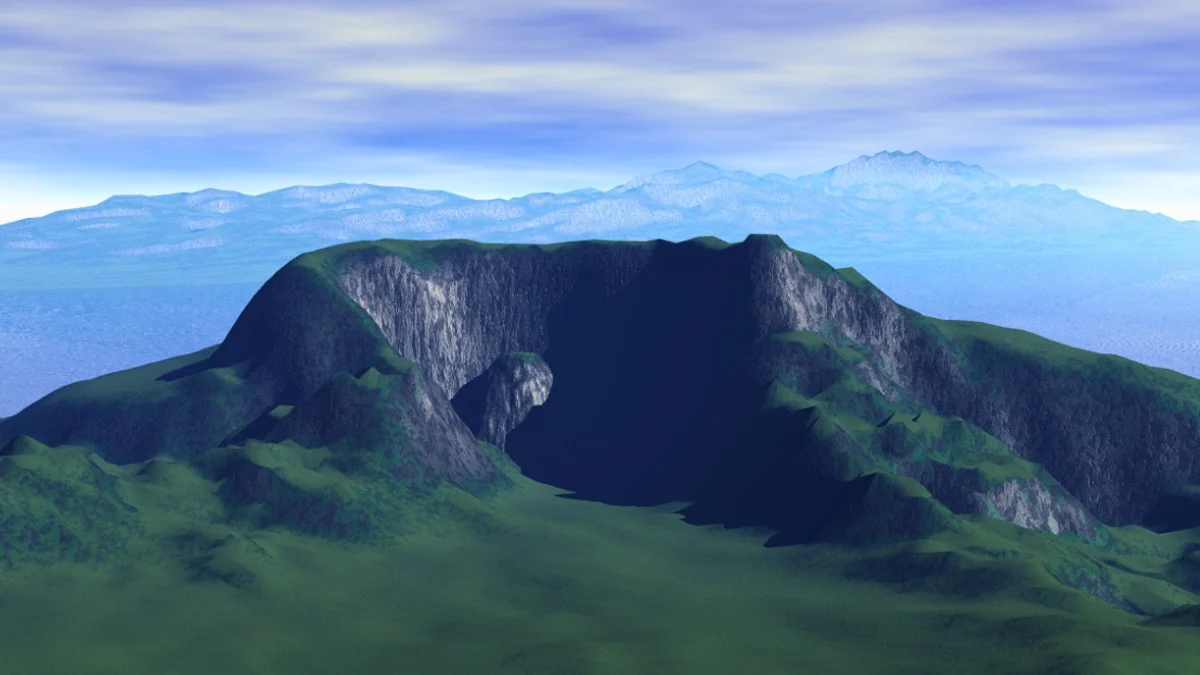
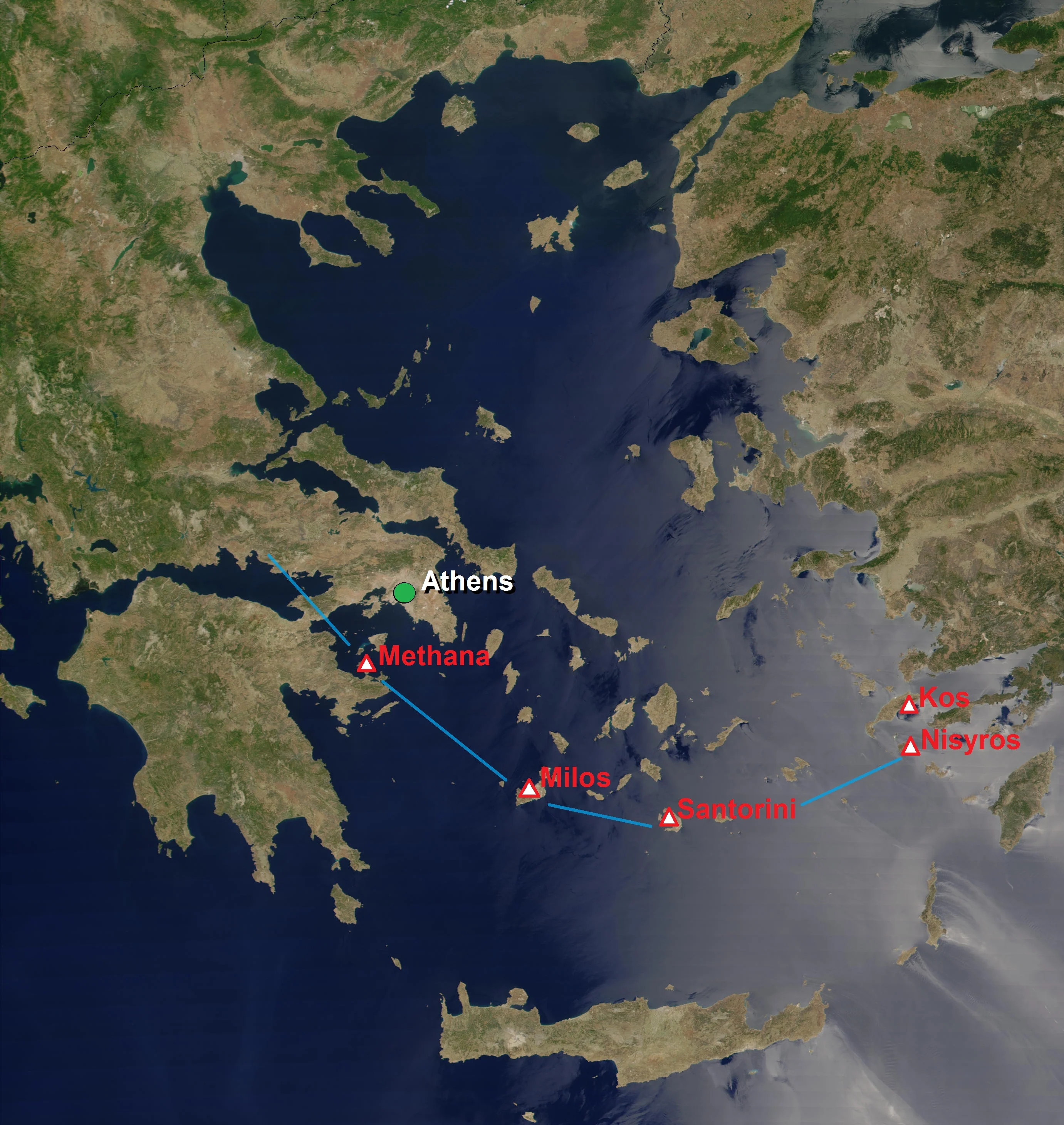
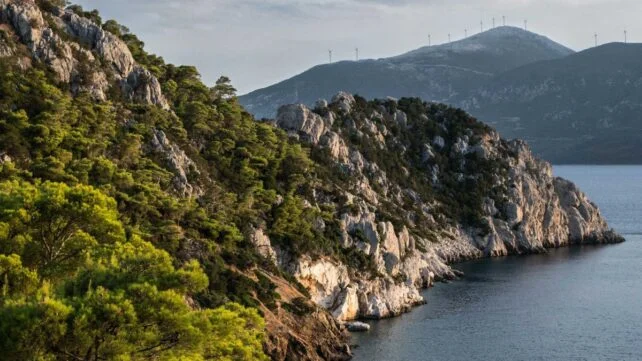
This alarming insight emerges from research conducted by a collaborative group of volcanologists at ETH Zurich in Switzerland, who meticulously reconstructed the geological past of the Methana volcano, situated near Athens, Greece, spanning a period of 700,000 years.
Their investigation unearthed a significant proliferation of microscopic zircon crystals during Methana’s most extensive quiescent phase, which persisted for over 100,000 years. This finding strongly suggests that immense quantities of magma were actively forming beneath the surface.
Such prolonged periods of deceptive dormancy pose a considerable risk, as current methodologies for forecasting volcanic hazards rely on the presumption that volcanoes may cease activity after approximately 10,000 years without eruptions.
To gain a more profound understanding of the interplay between eruptive cycles and magma accumulation, the researchers undertook an analysis of rock specimens collected from 31 distinct locations across the volcano. These samples were all linked to ancient eruptive episodes of Methana, cataloging a thermal history that spans more than half a million years.
“Our findings indicate that volcanoes possess the capacity to ‘breathe’ internally for extended epochs without any surface manifestations,” stated Olivier Bachmann, a senior author of the study and a volcanologist at ETH Zurich.
The Methana volcano represents the westernmost element of the South Aegean Volcanic Arc, a geological belt characterized by volcanic hotspots generated by the dynamic processes of plate tectonics that traverse the Greek islands. This arc also encompasses the Thera volcano, which is theorized to have been responsible for the devastation of the Minoan civilization on Santorini approximately 3,600 years ago.
This research provides compelling corroboration for the hypothesis that periods of quietude can harbor significant danger – a notion tragically illustrated by the numerous human settlements that have been obliterated by volcanic ash, lava flows, and toxic gases emanating from seemingly dormant yet perilous volcanoes.
The Methana volcano, which remains active, has experienced over 31 eruptive events, including three explosive occurrences, throughout its history spanning hundreds of thousands of years. Although its precise eruptive timeline is not fully elucidated, its most recent eruption was documented around 2,250 years ago and notably recorded by the esteemed Greek historian Strabo.
To probe deeper into the geological past, the researchers meticulously analyzed crystalline structures within the Methana rock samples, determining their ages by measuring the radioactive decay rates of elements such as uranium.
Microscopic zircon crystals are particularly valuable for such analyses. These crystals form within magmatic environments and function as intrinsic chronometers, providing precise data on their formation time and location, thereby preserving invaluable geological records for over four billion years.
“We can conceptualize zircon crystals as miniature flight recorders,” explained Bachmann.
“By dating more than 1,250 of these crystals across a 700,000-year span of volcanic activity, we have successfully reconstructed the volcano’s internal dynamics with a level of precision and statistical robustness previously unattainable until a decade ago.”
The detailed reconstruction revealed that volcanoes appearing to be in repose may indeed be internally active. Notably, the period of most intense zircon formation at Methana coincided with an unusually protracted quiescent interval, extending from approximately 280,000 to 170,000 years ago.
Intriguingly, this peak in zircon production—a strong indicator of magma generation, which creates optimal conditions for zircon crystallization—occurred despite the absence of any discernible surface volcanic activity.
This apparent paradox is attributed to the underlying geological forces that shaped Methana’s subterranean structure. Beneath the volcano, one tectonic plate is gradually descending beneath another, a profound geological process known as subduction.
This descending tectonic plate acts like a massive conveyor belt, transporting significant quantities of seafloor sediments and water deep into the Earth’s mantle. This introduction of water into the mantle greatly enhances magma production.
However, an increased saturation of water also promotes crystallization within the rising magma, rendering it more viscous and less mobile. The researchers’ modeling indicated that this thickened magma experiences decelerated ascent, causing the substantial magma reservoirs to accumulate at shallower depths, consequently leading to reduced eruptive frequency.
“Our current hypothesis suggests that numerous subduction zone volcanoes may be periodically supplied by exceptionally water-rich primitive magma, a phenomenon that has not yet been fully appreciated by the scientific community,” elaborated lead author Răzvan-Gabriel Popa, a volcanologist at ETH Zurich.
“Methana serves as a compelling case study where this effect is clearly discernible, but the implications of our findings possess a broader applicability and significance.”
Consequently, this research offers novel evidence that extended periods of dormancy may not signify an absence of risk, potentially compelling hazard assessment authorities to re-evaluate volcanoes currently categorized as ‘extinct’.
The researchers propose that by diligently monitoring parameters such as gas emissions, ground deformation, volcano-tectonic seismic activity, and gravity anomalies, global hazard management agencies could effectively identify which long-dormant volcanoes are in the process of silently becoming reawakening.
“This underscores the critical importance of continuous monitoring of dormant volcanoes, even in the absence of recent eruptive activity,” the research team concluded.
This investigative work has been published in the esteemed journal Science Advances.