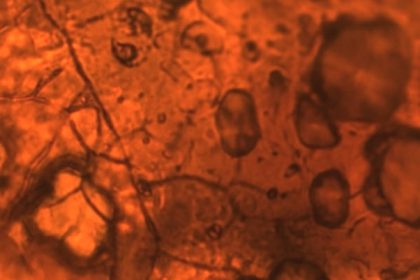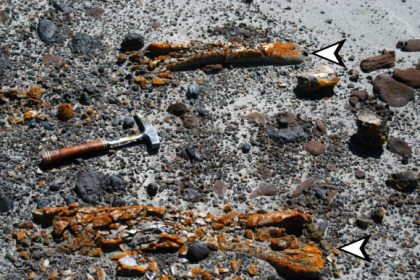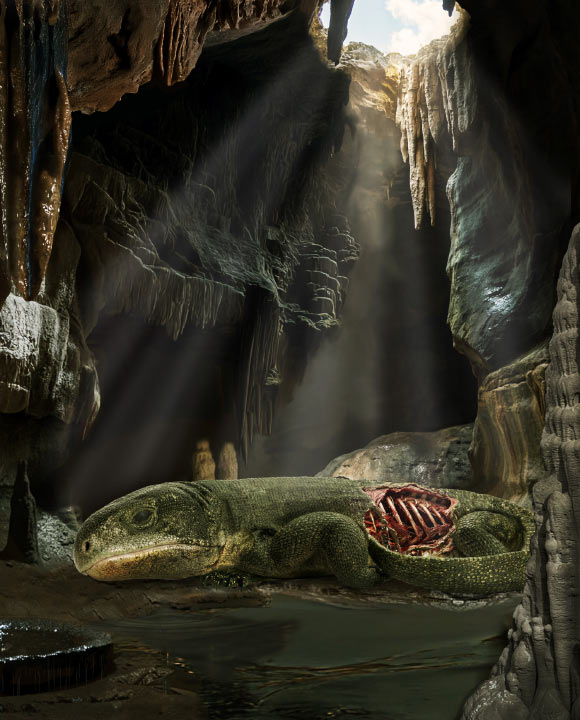
An examination of 289-million-year-old specimens of the early reptile Captorhinus aguti has revealed an astonishing preservation of three-dimensional skin, a fully intact shoulder girdle and ribcage including cartilaginous elements, and — remarkably — protein residues that surpass the prior oldest known instance by almost 100 million years.
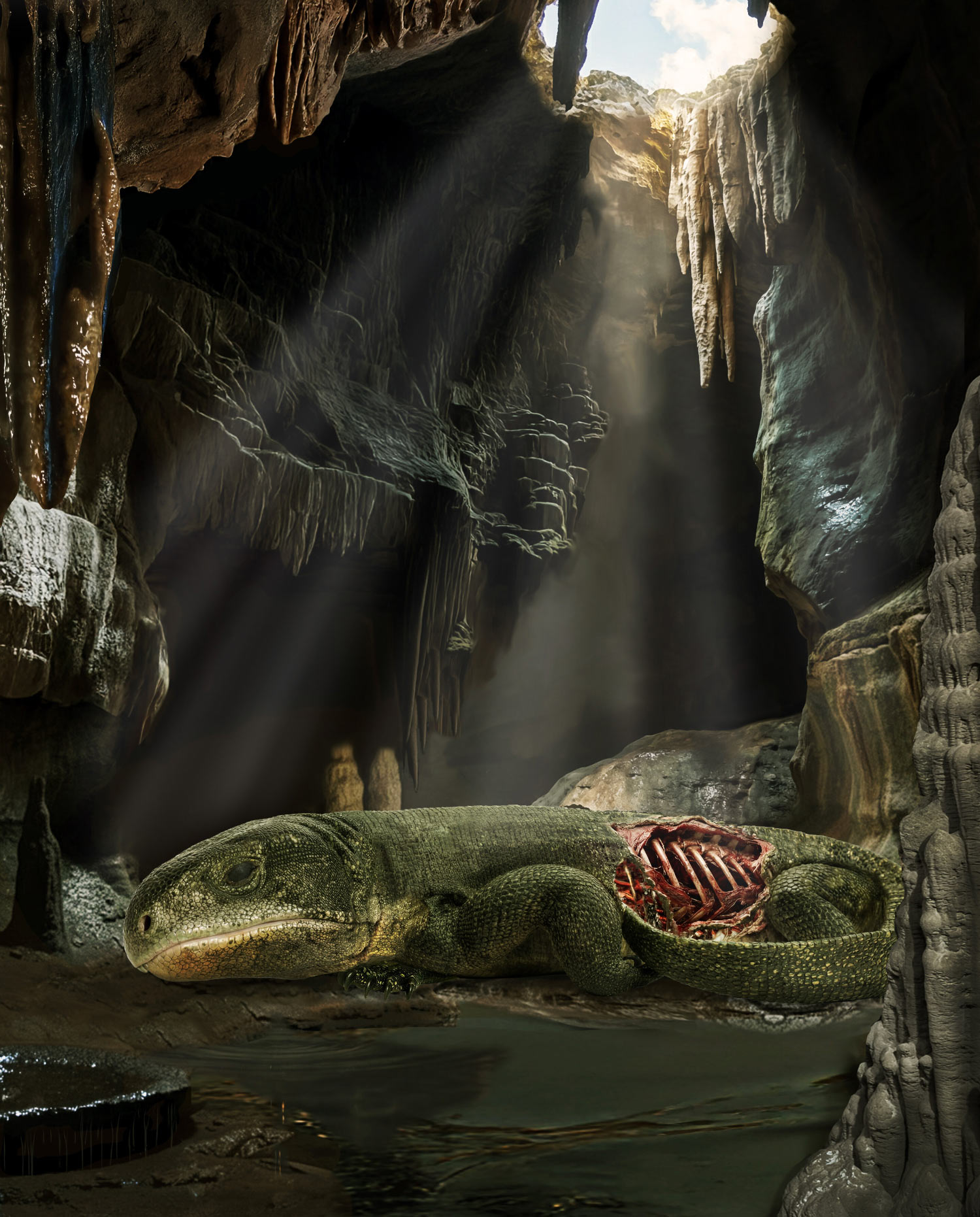
Captorhinus aguti. Image credit: Michael DeBraga.
The transition from aquatic existence to terrestrial life marked a pivotal milestone in vertebrate evolutionary history. Consequently, early amniotes required novel respiratory mechanisms to thrive in arid terrestrial settings.
While prior amniotes largely depended on buccal and cutaneous respiration, later lineages evolved rib and thoracic cage utilization for pulmonary ventilation.
The scarcity of fossilized soft tissues typically impedes direct empirical evidence regarding the timing and modality of this evolutionary shift.
“Captorhinus aguti, with its lizard-like morphology, is a crucial subject for deciphering the evolutionary trajectory of early amniotes,” stated Ethan Mooney, a doctoral candidate affiliated with Harvard University.
“This organism, achieving lengths exceeding 5 cm, was among the earliest recognized reptiles to adapt to terrestrial environments. It flourished and was abundant during its epoch.”
Three exceptionally well-preserved specimens of Captorhinus aguti were unearthed from distinctive cave formations proximate to Richards Spur, Oklahoma.
These fossils, embedded in fine clay and permeated with oil, have yielded previously undocumented anatomical features.
Within one specimen, researchers identified a segmented cartilaginous sternum, sternal ribs, intermediate ribs, and associated structures linking the ribcage to the shoulder girdle.
This discovery provides the first fossil record in an early reptile that permits the visualization and reconstruction of the complete respiratory apparatus of an early amniote.
“We posit that the respiratory system observed in Captorhinus aguti represents the ancestral state for the rib-assisted respiration characteristic of extant reptiles, birds, and mammals,” commented Professor Robert R. Reisz, a distinguished paleontologist from the University of Toronto and Jilin University.
“The employment of ribcage musculature constituted a fundamental evolutionary advancement facilitating the terrestrial colonization by these primordial ancestors of modern reptiles and mammals.
This physiological innovation likely also spurred the rapid diversification of early amniotes, thereby establishing the conditions for their terrestrial ascendancy.”
“This development was transformative, enabling these creatures to adopt a significantly more dynamic lifestyle,” Mooney elaborated.
Employing synchrotron infrared spectroscopy, the research team also detected residual original proteins within the bone, cartilage, and skin tissues.
These organic molecules, unprecedented in fossils from the Paleozoic era, predate the previous oldest known example, discovered in dinosaur remains, by approximately 100 million years.
“The detection of protein remnants is an extraordinary finding,” Mooney remarked.
“It substantially expands our comprehension of the potential for soft tissue preservation within the fossil record.”
The findings of this groundbreaking research are documented in an accompanying publication featured in the esteemed journal Nature.
_____
R.R. Reisz et al. Mummified Early Permian reptile reveals ancient amniote breathing apparatus. Nature, published April 8, 2026; doi: 10.1038/s41586-026-10307-y