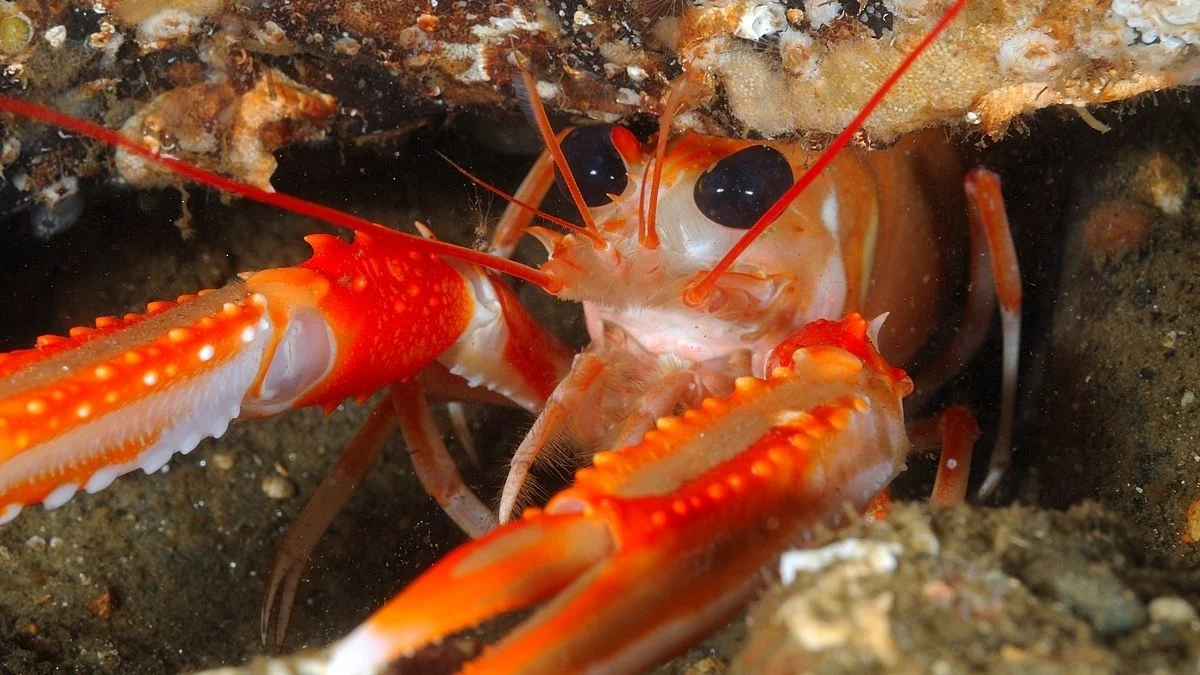
Recent scientific investigations have revealed that common human analgesics significantly alter the behavioral responses of Norway lobsters when subjected to noxious stimuli.
This discovery stems from a meticulously conducted study, furnishing further robust corroboration for the theory that decapod crustaceans, including lobsters, are capable of experiencing nociception. Nociception, defined as the sensory nervous system’s process of encoding noxious stimuli, is a key criterion in the definition of animal pain.
“There is already evidence indicating that decapod crustaceans manifest observable signs of distress and suffering when subjected to injurious events, such as the forced amputation of a limb,” states zoophysiologist Lynne Sneddon from the University of Gothenburg in Sweden.
“Our most recent experimental findings demonstrate that Norway lobsters react negatively to electrical stimuli, which are perceived as painful by humans.”
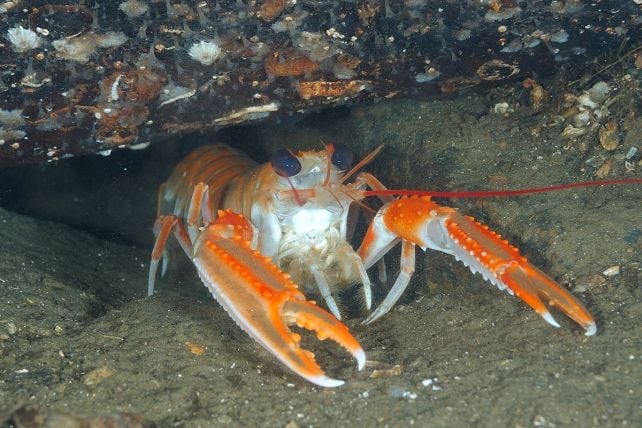
Lobsters and a variety of other crustaceans are held in high regard as culinary delicacies in numerous cultures. The pervasive assumption that these creatures lack the capacity for pain may have historically facilitated preparation methods such as boiling them alive.
Such practices have subsequently been prohibited as animal mistreatment in many jurisdictions worldwide. Furthermore, the United Kingdom’s government has formally acknowledged lobsters, octopuses, and crabs as sentient beings.
Nevertheless, definitively establishing whether an animal can experience pain or nociception, particularly in the case of a crustacean, continues to present a significant hurdle.
The fundamental challenge lies in the inherent difficulty of ascertaining an animal’s subjective experience of pain. Cross-species communication limitations prevent a nuanced understanding of whether an animal’s response to harm incorporates an emotional dimension.
This complexity underscores the International Association for the Study of Pain’s recent revision of its pain definition. The association now defines pain as “an unpleasant sensory and emotional experience associated with, or resembling that associated with, actual or potential tissue damage.”
Conversely, nociception refers specifically to “the neural process of encoding noxious stimuli.” This entails the nervous system detecting a potentially harmful stimulus and relaying this information to the central nervous system for an appropriate response, much like a dog whimpering or a snail retracting.
The current investigation indicates that electrical stimuli, previously suggested as a “humane” method for dispatching lobsters prior to culinary preparation, appear to elicit a pronounced escape reflex in these crustaceans.
The research team meticulously placed their Norway lobsters within controlled aquarium environments. The experimental protocol involved administering a low-level electrical current to the surrounding water for approximately 10 seconds.
For comparative purposes, some lobsters were handled by the researchers without the application of an electrical shock. These individuals were transferred between tanks, a procedure that induced stress without causing direct harm. This “sham” group served as a crucial control, enabling the researchers to attribute the observed responses to the electrical stimulus rather than mere stress induced by handling.
Certain cohorts of lobsters were administered analgesic agents prior to their exposure to either the electrical stimuli or the handling procedure. Some received aspirin injections, while others were immersed in water containing dissolved lidocaine.
Behavioral changes in the lobsters were meticulously recorded through video analysis, both before and after the experimental interventions. Additionally, small samples of hemolymph, the crustacean equivalent of blood, were collected to quantify stress-related biochemical markers. Subsequent analysis of gene expression in nervous system tissue was conducted after the animals were humanely euthanized.
Lobsters subjected to the electrical stimulus almost invariably reacted by rapidly contracting their tails in an attempt to flee. However, when painkillers were administered beforehand, the frequency of this tail-flipping behavior was substantially reduced or entirely absent.
Alterations observed in the hemolymph chemistry and gene expression patterns of the shocked lobsters also indicated an augmented physiological stress response, thereby confirming the reality of the effect and demonstrating the lobsters’ capacity for a biological reaction to detrimental stimuli.
“The efficacy of painkillers developed for human application in Norway lobsters highlights a degree of functional similarity,” Sneddon comments.
“Consequently, it is imperative that we extend compassionate consideration to the methods by which we treat and terminate crustaceans, mirroring the ethical standards applied to avian and bovine species.”
The researchers conclude that these findings necessitate further investigation to mitigate potential suffering in animals that have historically been utilized by humans with insufficient regard for their welfare, both in culinary contexts and laboratory settings.
“By substantiating both the potential for nociception induced by electrical stimuli and the ameliorative impact of analgesics,” the research team asserts, “this study furnishes a foundational basis for enhancing welfare protocols for decapod crustaceans within research, aquaculture, and fisheries.”
The findings have been formally disseminated in the peer-reviewed journal Scientific Reports.