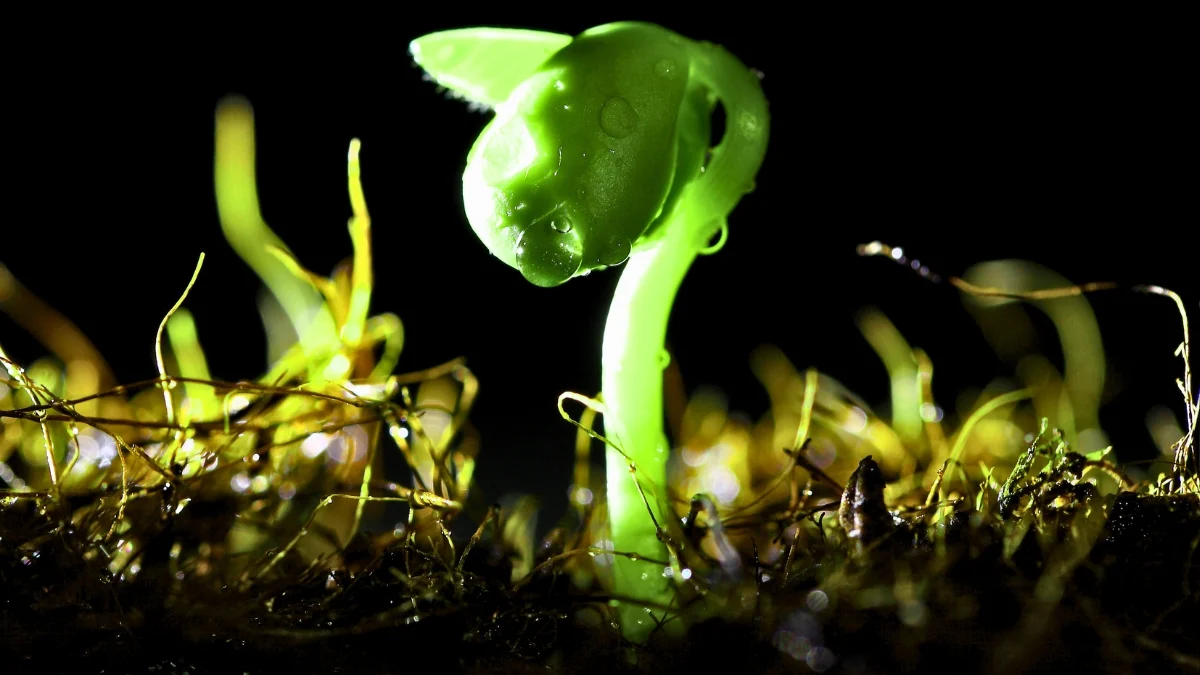
Microscopic inhabitants of the earth’s surface, specifically bacteria and fungi, possess a remarkable capability that enables them to influence atmospheric moisture and precipitate rainfall, as indicated by a recent scientific investigation.
To grasp how these minuscule organisms can exert control over meteorological events like storms, it is essential to first comprehend the process by which clouds transform into precipitation. At elevated altitudes within the atmosphere, water does not invariably transition to a solid state at the standard freezing point of 0 °C. While atmospheric temperatures are typically considerably lower at cloud altitudes, untainted water molecules can remain in a liquid phase at a frigid -40 °C.
Precipitation predominantly originates as ice. Within the atmosphere, clouds are replete with “supercooled” water – liquid water that is below its freezing point but has not yet solidified into ice due to the absence of suitable nucleation sites.
For a cloud to yield rain or snow, it necessitates a “seed” — an infinitesimally small particle onto which water molecules can aggregate, enabling their crystallization into ice, which subsequently descends from the clouds.
Particulate matter such as dust, soot, and salt, lofted into cloud formations by atmospheric currents, are capable of acting as condensation nuclei, facilitating this process, albeit with limited efficacy. These substances generally require a substantial drop in temperature before initiating ice formation. This is precisely where biological entities come into play.
Introducing the ice generators
For numerous years, scientific consensus has acknowledged the existence of ice-nucleating proteins (INpros) found in specific bacterial species, such as Pseudomonas syringae. These bacteria are transported from the surfaces of plants into the atmosphere, where they initiate the precipitation process. They employ specialized proteins that compel water to freeze at temperatures as mild as -2 °C.
However, the recent discovery, detailed in the journal Science Advances, has illuminated the role of a novel contributor to atmospheric dynamics: fungal ice-nucleating proteins.
While bacteria retain their frost-forming proteins on their external surfaces, commonly referred to as their “skin,” fungi, notably species like Fusarium and Mortierella, excrete these proteins into the surrounding soil medium.
The molecular architecture of these fungal proteins renders them soluble in water and smaller in size compared to their bacterial counterparts. Furthermore, they exhibit a high capacity for ice nucleation, making them exceptionally effective agents for seeding clouds.
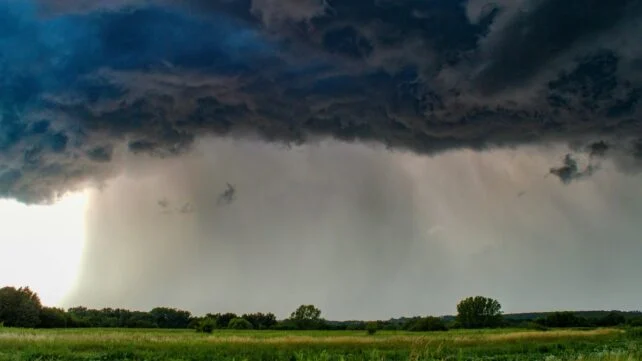
Facilitating precipitation
This brings us to the bioprecipitation cycle. Envision a forest floor colonized by these fungi. When wind currents arise, their minuscule ice-forming proteins are propelled into the atmospheric domain. Upon reaching cloud formations, they function as potent nucleation centers.
Even in clouds with relatively moderate temperatures (above -5°C), these fungal proteins can induce water molecules to crystallize into ice. As these ice crystals grow, their increasing mass causes them to descend. During their passage through warmer atmospheric layers, they melt, transforming into rain.
This natural phenomenon establishes a self-perpetuating cycle:
- Fungal proliferation occurs in the moist substrate of a forest environment.
- Proteins synthesized by the fungi are dispersed into the upper atmosphere.
- Rainfall is subsequently initiated by these proteins, thereby irrigating the forest below.
- The resultant moisture promotes further fungal growth, perpetuating the cycle.
In contrast to Pseudomonas bacteria, which employ ice formation to exploit and damage crops for nutrient acquisition, these Mortierella fungi are symbiotic plant associates, not antagonists. They do not exhibit destructive tendencies.
Instead, they actively secrete their ice-forming proteins into the surrounding soil matrix. This action appears to generate a protective microenvironment, shielding them from adverse conditions and fostering a nutrient-rich ecosystem conducive to the prosperity of both the fungus and its host plant.

The recent revelation concerning fungal involvement is particularly noteworthy as it demonstrates that even subterranean organisms can exert influence on atmospheric processes, thereby introducing a novel dimension to the ancient interrelationship between life and the heavens.
This finding represents a crucial missing element in our understanding of how biological systems and the global climate co-evolve. This ice-nucleating capability likely confers a significant survival advantage upon the fungi.
They leverage ice formation to channel moisture towards their mycelial networks (an extensive subterranean lattice of fine fungal threads), to insulate themselves against the damaging effects of sharp frost, and to facilitate dispersal to new habitats by riding atmospheric currents.
The evolutionary appropriation
The latest research has also elucidated the mechanism by which fungi of the Mortierellaceae family acquired their ice-forming proficiency. Close examination of the fungi’s genetic material by researchers revealed that this trait was not independently developed by these organisms.
Millions of years ago, they acquired the genetic blueprint for this capability from bacteria through a phenomenon known as horizontal gene transfer.
This process can be conceptualized as a biological equivalent of “copying and pasting” genetic information. While most higher organisms inherit genetic material exclusively from their progenitors, microorganisms possess the capacity to exchange genetic fragments with neighboring species, thereby achieving rapid evolutionary advancements.
However, these fungi exhibit superior ice-forming efficiency compared to bacteria. Because the fungi secrete these proteins into their external environment, they are able to permeate the surrounding soil and remain active long after the fungus itself has migrated.
These proteins are remarkably resilient. They can be transported into waterways, desiccate into dust particles, and subsequently be lifted into the atmosphere by wind currents.
The significance of this discovery
This revelation holds profound implications for conservation strategies. The practice of deforestation, which involves the complete removal of trees and the denudation of the land, results in more than just the loss of arboreal cover.
It may also disrupt the biological mechanisms responsible for triggering regional precipitation events. As the planet confronts a shifting climate characterized by increasingly frequent periods of drought, comprehending the function of fungal INpros could prove invaluable. In the future, these naturally occurring, biodegradable proteins may be harnessed for artificial “cloud seeding” to induce rainfall.
Numerous nations, including the United Arab Emirates, China, and certain regions within the United States, currently employ cloud-seeding initiatives to safeguard agricultural crops from frost damage. Nevertheless, these conventional methods predominantly rely on silver iodide, a heavy metal with the potential for environmental persistence.
Fungal proteins present a sustainable, biodegradable alternative. Their application could also extend to frost protection for crops. By inducing premature and smooth ice formation, they release a minute thermal impulse, effectively acting as a protective thermal shield for the plants.
Furthermore, these proteins could be utilized for energy-efficient snow production on ski slopes, enhancement of frozen food quality by inhibiting the formation of large, damaging ice crystals, or the development of environmentally benign cooling systems that eschew reliance on pervasive chemical refrigerants.
The next time you experience a sudden downpour, take a moment to inhale deeply. The characteristic “scent of rain” might, in fact, be the subtle signal from these minute organisms, indicating to the clouds that it is time to release their moisture.