While the use of tobacco by humans dates back many centuries, the isolation of pure nicotine from tobacco flora did not occur until the late 1820s.
Now, two centuries after that initial extraction, scientific inquiry has elucidated the precise biochemical pathway by which the tobacco plant synthesizes its nicotine molecules.
This breakthrough holds substantial promise for revolutionizing the development of products derived from or incorporating tobacco species, a field often referred to as ‘plant molecular farming’.
Researchers have previously modified tobacco plants to yield therapeutic compounds and even vaccines. However, the inherent presence of nicotine, a substance known for its potent addictive properties, has presented a significant obstacle.
A comprehensive understanding of nicotine biosynthesis could empower scientists to devise strategies for inhibiting its production within these plants.
“This represents a pivotal moment in botanical science and biochemistry, as we have finally uncovered the answer we’ve pursued for over two hundred years,” states biologist Benjamin Lichman, affiliated with the University of York.
Lichman and his collaborators at the University of Copenhagen in Denmark, in their recent investigation, successfully pinpointed the specific genes and enzymatic agents responsible for nicotine synthesis.
“Leveraging this newfound comprehension allows us to either eliminate or repurpose the nicotine naturally generated by the plant, thereby enhancing our biotechnology tools,” Lichman remarks.
“Furthermore, there is considerable potential for adapting the tobacco plant’s nicotine-forming mechanisms to facilitate the production of valuable pharmaceutical compounds in the future.”
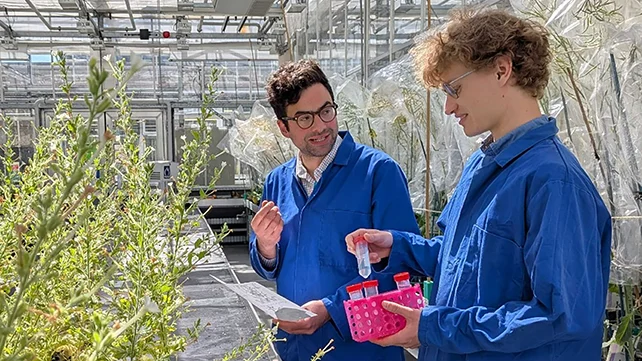
Through rigorous genetic analysis of tobacco plants (Nicotiana tabacum), the research team identified gene clusters located in close proximity within the tobacco genome. These genes demonstrated co-activation with genes previously recognized as integral to nicotine synthesis.
Subsequently, the enzymes produced by these identified genes were isolated.
Experiments conducted both in vitro (test tubes) and within live plant systems confirmed that these isolated enzymes collaborate to construct the nicotine molecule.
The enzymatic process employed is notably intricate, offering insight into why its elucidation has been so challenging until now.
Initially, a glucose molecule is appended to the foundational components of nicotine, inducing a reactive state essential for subsequent molecular assembly. This same glucose molecule is then detached upon completion of the synthesis, effectively fulfilling its crucial role before being eliminated from the pathway.

The research team also identified two key enzymes, designated NaGR and NicGS, which are instrumental in assembling the nicotine molecule from its precursor materials. These precursors consist of an amino acid vital for protein synthesis and a compound akin to a vitamin.
“The excitement stems from the direct practical implications of this discovery,” Lichman asserts.
“It unlocks novel avenues for harnessing tobacco plants for benevolcial purposes, moving beyond their traditional use in cigarettes towards applications in pharmaceuticals and other high-value products.”
A separate, recently disseminated study corroborates these findings, indicating that nicotine is indeed produced through a glucose-mediated process, facilitated by a cascade of enzymes, followed by the subsequent disappearance of the glucose moiety.
According to the researchers, this complete eradication of glucose, combined with the atypical utilization of glucose in this specific biosynthetic pathway compared to other plant metabolic routes, is the primary reason for the prolonged obscurity of nicotine production mechanisms.
While certain aspects of nicotine synthesis within tobacco plants still warrant further investigation, the principal stages and critical molecular components have now been definitively identified.
The researchers propose that this intricate process could be ingeniously modified to generate alternative chemical substances or to cultivate tobacco varieties with significantly reduced nicotine content. However, prior attempts to genetically alter nicotine production have regrettably resulted in compromised plant vigor and growth.
In essence, these investigators have not only resolved a scientific enigma persisting for two centuries but have also established a foundational framework for more sophisticated and precise bioengineering endeavors.
“Tobacco plants possess considerable potential as biotechnological platforms for generating vaccines and other pharmaceutical agents. However, their utility is significantly hampered by the presence of nicotine, which contaminates the manufactured products and necessitates an often-complex purification process,” Lichman explains.