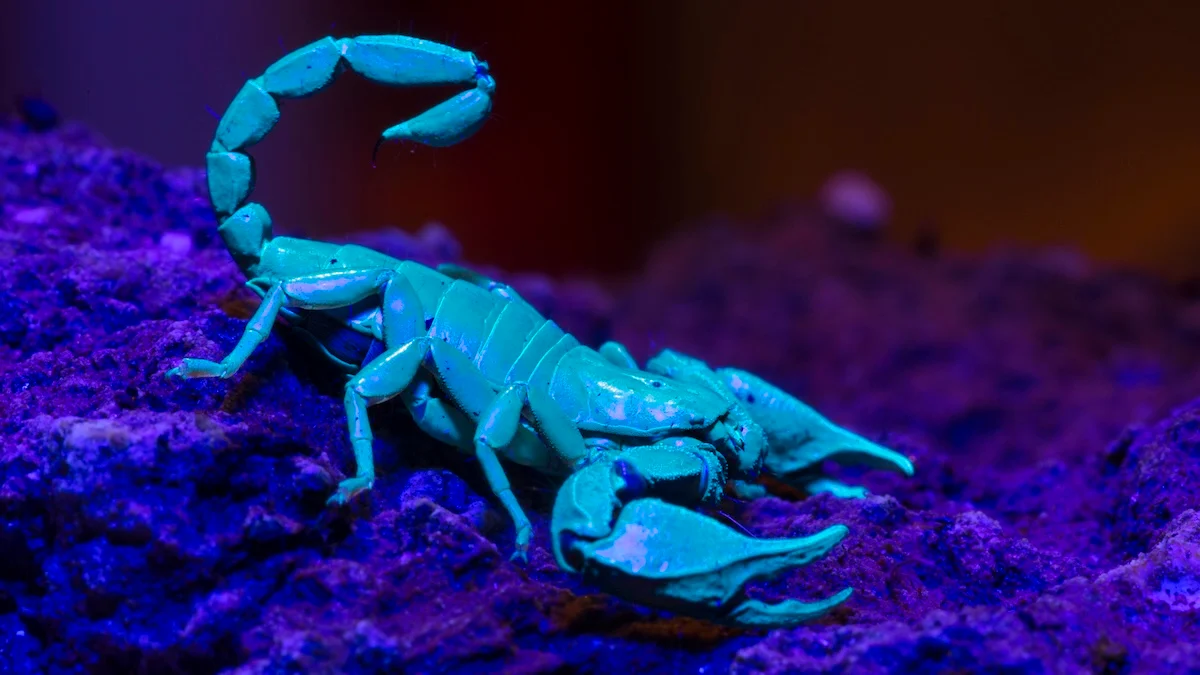
Equipped with venomous stingers and crushing pincers, scorpions possess some of the animal kingdom’s most formidable natural weaponry—armament, it has been discovered, that is fortified with metallic elements.
Current scientific investigation reveals that various scorpion species integrate these metals into their exoskeletons through distinct mechanisms, tailored to their specific predation and defense strategies.
A comprehensive examination was conducted on the stingers and pincers of eighteen distinct scorpion species. Utilizing X-ray and electron microscopy, researchers painstakingly analyzed the localized accumulation of metals such as zinc, iron, and manganese.
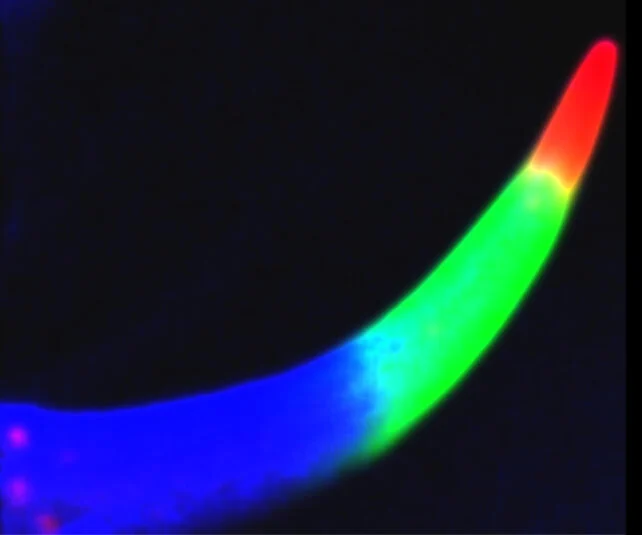
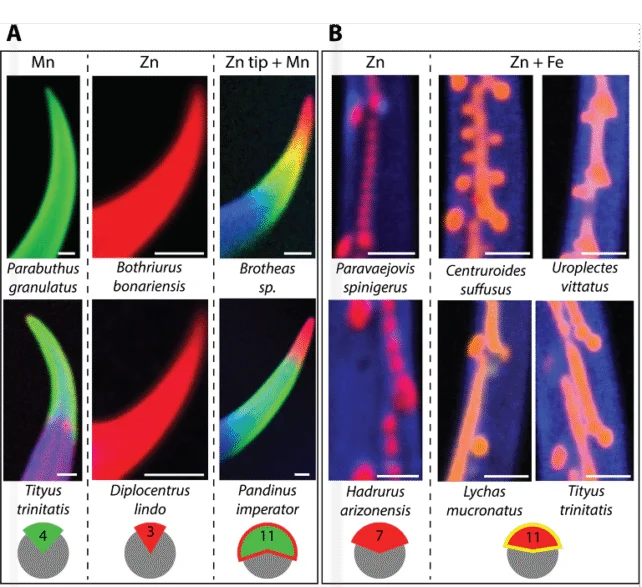
Findings indicated that zinc typically exhibits a concentration at the very tip of the stinger, whereas manganese emerges as the dominant metal further along its length.
Conversely, within the pincers, zinc and iron are predominantly observed along the inner edge of the cutting surface, contributing to their resilience against the forces exerted during prey capture and mastication.
These distinct metallic distribution patterns were generally not found concurrently within the same species. An elevated presence of zinc in the pincers, for example, often correlated with a reduced concentration in the stinger, and vice versa.
“The high-resolution, microscopic analytical techniques we employed permitted an exceptionally detailed identification of individual transition metals, vividly demonstrating nature’s sophisticated engineering of these metallic components within scorpion weaponry,” remarks Edward Vicenzi, a research scientist affiliated with the Smithsonian Museum Conservation Institute.
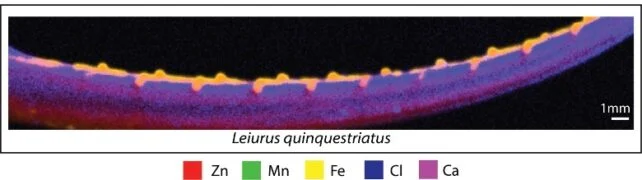
Although scorpions share a fundamental body structure, distinct species tend to place varying emphasis on their specialized appendages.
The genus Opistophthalmus, for instance, is characterized by a pair of robust pincers with a comparatively less developed tail.
This specialization is attributed to their lifestyle; these scorpions utilize their forelimbs extensively for excavating burrows, and consequently, their predatory strategy prioritizes crushing prey with their claws, reserving the stinger for supplementary defense.
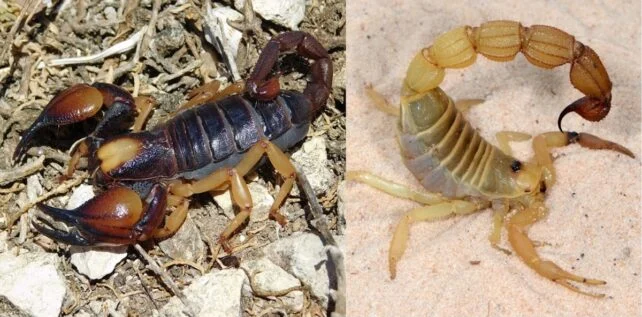
In contrast, scorpions belonging to the Parabuthus genus, aptly named thick-tailed scorpions, rely heavily on their potent venom delivered via their powerful stingers, rendering the act of grasping prey a secondary concern. This is evident in their comparatively diminutive pincers.
Initially, it might be presumed that larger pincers would exhibit greater metallic reinforcement than smaller ones, a hypothesis that guided the initial stages of this research. However, the empirical outcomes presented a surprising divergence from expectations.
The analytical data revealed that species possessing elongated claws and reduced crushing efficacy demonstrated a higher degree of zinc enrichment in their pincers when contrasted with species exhibiting more potent crushing capabilities.
While seemingly paradoxical, this finding aligns with a specific evolutionary rationale.
“This suggests a functional role for zinc extending beyond mere hardness, potentially contributing more significantly to structural integrity and durability,” posits Sam Campbell, an evolutionary biologist at the University of Queensland in Australia.
“Consider that elongated claws are essential for securely apprehending prey and preventing escape prior to venom injection.
“This discovery is particularly compelling as it hints at an evolutionary correlation between the specific biomechanical demands placed on a weapon and the precise material properties of the metals that reinforce it.”
This insightful research carries substantial implications, not solely for scorpions but also for a broader array of arthropods that utilize metallic elements to fortify their natural weaponry—encompassing entities such as spider fangs, ant mandibles, and the stingers of bees and wasps.
Furthermore, it prompts a moment of reflection on the fortunate extinction of prehistoric creatures like the ‘hell ants,’ which purportedly bore formidable metallic spikes upon their heads.