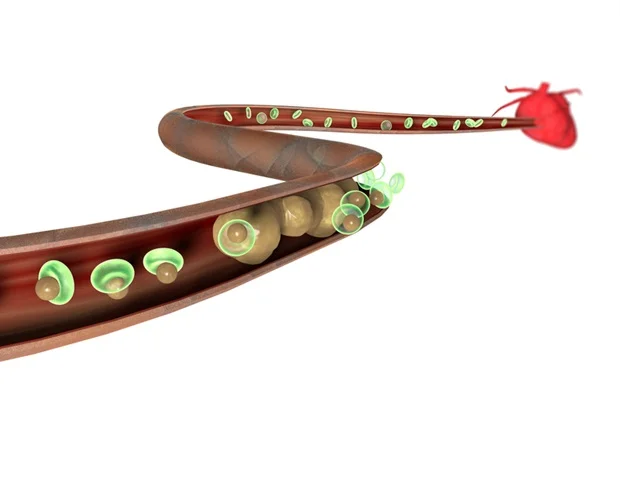
New analyses of over 20,000 individuals from three significant National Institutes of Health (NIH) investigations reveal a correlation between elevated Lipoprotein(a) [Lp(a)] and persistent cardiovascular risk, underscoring the necessity for robust risk mitigation strategies. These groundbreaking findings were disclosed today at the Society for Cardiovascular Angiography & Interventions (SCAI) 2026 Scientific Sessions and the Canadian Association of Interventional Cardiology/Association Canadienne de cardiologie d’intervention (CAIC-ACCI) Summit held in Montreal.
Lipoprotein(a) is a bloodborne particle responsible for transporting cholesterol. It bears resemblance to LDL, commonly referred to as “bad” cholesterol, but features an appended protein that potentially amplifies its contribution to the development of heart disease. Predominantly inherited, elevated Lp(a) levels can elevate cardiovascular risk even in the presence of normal conventional cholesterol markers. Approximately one in five individuals possesses high Lp(a), often remaining unaware due to its typically asymptomatic nature. While the association between elevated Lp(a) and cardiovascular pathology is acknowledged, its precise predictive value for risk in patients with and without pre-existing cardiac conditions is not yet comprehensively elucidated.
Investigators meticulously examined previously collected plasma specimens from 20,070 participants, aged 40 and above, enrolled in the ACCORD, PEACE, and SPRINT NIH randomized clinical trials. All samples underwent evaluation in a specialized translational laboratory utilizing a standardized assay, with results reported in the contemporary standard of nmol/L. Participants were subsequently stratified based on their Lp(a) concentration (<75, 75-125, 125-175, or ≥ 175 nmol/L) and the presence or absence of pre-existing heart disease. Cox regression models were employed, with adjustments for demographic variables, comorbidities, lipid profiles, and therapeutic interventions.
The average age of the study cohort was 65.2±8.5 years, with males constituting 64.9% of the participants. The primary endpoint was defined as major adverse cardiovascular events (MACE), encompassing myocardial infarction, stroke, coronary revascularization, or cardiac mortality. Over a median follow-up period of 3.98 years, a total of 1,461 (7.3%) MACE were recorded. Lp(a) levels equal to or exceeding 175 nmol/L were independently linked to an increased hazard ratio for MACE (HR 1.31, 95% CI: 1.10-1.55), cardiovascular death (HR 1.49, 95% CI: 1.07-2.06), and stroke (HR 1.64, 95% CI: 1.14-2.37). However, this elevated Lp(a) threshold did not demonstrate a statistically significant association with an increased risk of myocardial infarction. Furthermore, these associations were more pronounced in individuals with pre-existing cardiac conditions (HR 1.30, 95% CI: 1.07-1.57) compared to those without (HR 1.18, 95% CI: 0.91-1.54).
For the first time, we are able to precisely quantify the specific Lp(a) threshold that confers a significantly elevated risk of major cardiovascular events, particularly stroke and mortality. Irrespective of age, individuals can undergo a simple, cost-effective blood test to ascertain if they possess this hereditary predisposition. Should elevated Lp(a) levels be identified, close collaboration with their healthcare provider is essential to aggressively manage LDL cholesterol and optimize other cardiovascular risk factors to the greatest extent possible. This insight is particularly valuable given the forthcoming availability of novel targeted therapeutic interventions.
Subhash Banerjee, MD, FSCAI, Interventional Cardiologist, Baylor Scott & White, Dallas, Texas
The research team highlighted the potential of leveraging biospecimens to gain deeper insights from completed trials and intend to investigate additional patient cohorts, including those with chronic kidney disease and peripheral artery disease.