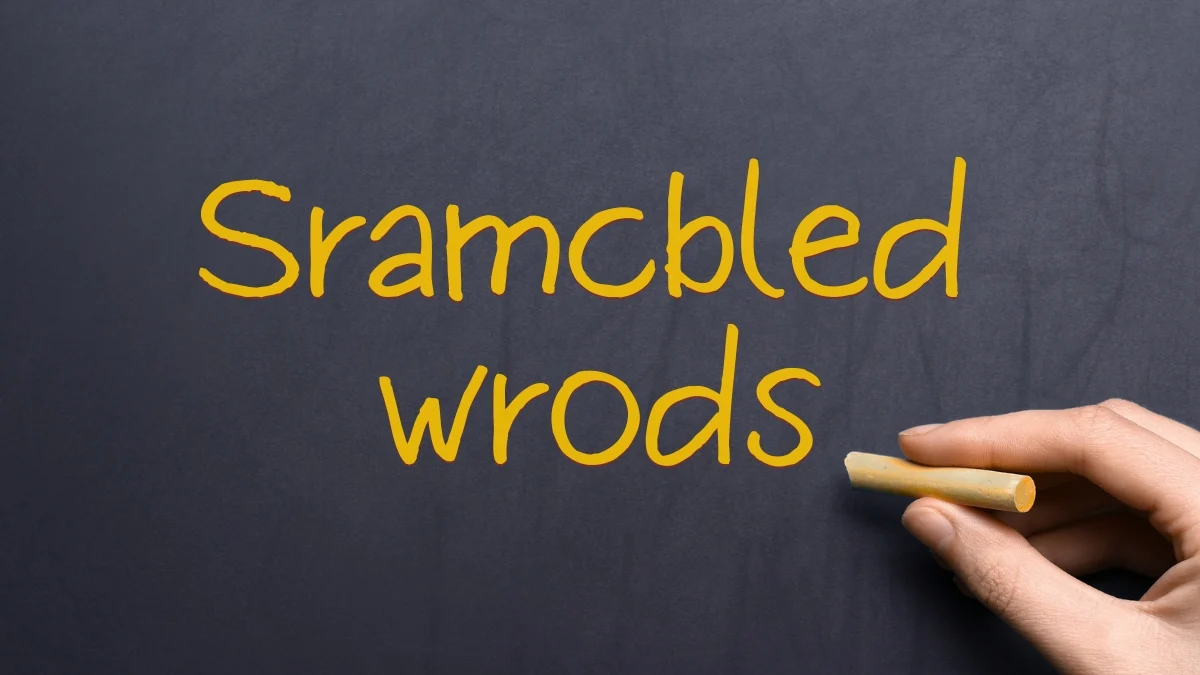
You’ve undoubtedly encountered it on social media: a block of text appearing as gibberish initially, yet surprisingly decipherable.
According to research conducted at Cambridge University, the arrangement of letters within a word holds less consequence than the placement of the initial and final characters. The interim letters can be in a complete disarray, yet comprehension remains unaffected. This phenomenon occurs because the human mind processes words holistically, rather than analyzing each individual character.
This effect, colloquially termed typoglycemia, is frequently disseminated online as an amusing illustration of cognitive processes.
However, this widely circulated assertion is merely a partial explanation. A deeper understanding necessitates an examination of how the brain engages with written language during the act of reading.
There is no singular, definitive directive.
The common belief accompanying this textual sample posits that as long as the first and last letters of a word remain in their correct positions, the intermediate letters’ order is inconsequential.
At first impression, this proposition appears reasonable.
Yet, while a degree of validity exists, the underlying rationale is flawed.
The ability to interpret disordered words owes far less to a deterministic principle concerning first and last letters, and considerably more to the brain’s utilization of contextual clues, the recognition of established patterns, and predictive processing.
Our reading process is not strictly sequential, character by character. Proficient readers seldom scrutinize each individual letter in a linear fashion.
Instead, accomplished readers achieve rapid word recognition by integrating multiple informational streams simultaneously. Psycholinguistic investigations indicate that our cognitive system apprehends words as recognizable configurations rather than as straightforward successions of discrete phonetic units.
These configurations encompass familiar orthographic sequences, the overall silhouette of the word, and, critically, the surrounding linguistic context. Our cognitive faculties are continuously engaged in forecasting subsequent elements, subsequently verifying these predictions against the incoming visual data.
This explains our common tendency to overlook typographical errors in our own written output. We perceive not what is objectively present on the page, but rather what our cognitive expectations dictate should be there.
The identical cognitive mechanism facilitates our comprehension of jumbled words. Even when letters are transposed, a sufficient portion of the word’s structural integrity is preserved, enabling the brain to formulate an informed inference. The characteristic shape and construction of words are significant.
The popular online narrative suggests that only the initial and terminal letters hold significance.
However, this assertion oversimplifies the intricate cognitive operations at play. We are demonstrably sensitive to the interrelationships between letters within a word. Prevalent spelling conventions and well-established letter combinations enhance word identifiability, even when subjected to minor distortions.
This also accounts for why certain visual disruptions impede reading fluency.
Text presented in alternating capitalization, for instance, “AlTeRnAtInG CaPs,” presents challenges to processing due to its disruption of the conventional visual outline of words.
The same principle applies to text rendered in a “ransom note” style, composed of disparate fonts, which interferes with the brain’s capacity for pattern recognition.
In essence, the ease of reading is contingent upon the preservation of a word’s internal structural coherence, extending beyond mere external letter placement.
Not all disordered textual arrangements are equally legible.
Were the popular meme’s premise accurate, any sentence featuring intact initial and final letters would be effortlessly readable. However, empirical observation contradicts this notion.
Consider the following illustration:
Slhal I cmorape tehe to a srmmeus day
This sentence adheres to the purported “rules,” yet it proves significantly more arduous to decipher. This is, in fact, the opening line of Shakespeare’s Sonnet 18: “Shall I compare thee to a summer’s day?”
The pronounced readability of the viral paragraph stems from its deliberate, though perhaps unconscious, design for facile interpretation.
Beneath the Surface: Several contributing factors enhance the processing ease of the renowned example.
Firstly, a substantial proportion of the words consist of few letters, thereby limiting the potential permutations of their constituent characters. Shorter words, such as “you” and “can,” are often left unmodified.
Secondly, grammatical function words, including “the,” “and,” and “is,” are typically presented in their standard form. These concise, frequently encountered words furnish the sentence’s structural framework, facilitating anticipation of subsequent terms.
Thirdly, in instances where longer words are scrambled, the alterations are frequently minor. Transpositions of adjacent letters (e.g., “wrod” instead of “word”) are considerably more amenable to processing than more substantial rearrangements.
Finally, the passage itself exhibits a high degree of predictability. Once the overarching theme and cadence are apprehended, the brain automatically interpolates the missing elements, mirroring a process akin to comprehending speech in a noisy environment.
The crux of understanding this phenomenon lies in the element of context. Words are not assessed in isolation. Each word’s interpretation is intrinsically linked to the surrounding lexicon and situated within a broader semantic framework.
This cognitive flexibility enables us to compensate for deficiencies or distortions in informational input.
However, limitations do exist. As the degree of letter transposition escalates, or as words deviate further from typical expectations, comprehension rapidly deteriorates. Furthermore, reading velocity experiences a notable deceleration, even when textual meaning remains discernible.
Intriguingly, computational systems have now achieved the capacity to reconstruct jumbled words with impressive precision.
By leveraging probabilistic analyses and pattern recognition across vast informational repositories, algorithms can ascertain the most probable authentic rendering of a word or sentence.
In this regard, both computational intelligence and human cognition operate on analogous principles. The reliance is not on rigid positional constraints, but rather on adaptable frameworks that weigh patterns and probabilities. This underscores why the “typoglycemia” narrative constitutes an oversimplification, rather than a scientifically validated tenet.
The enduring popularity of this concept stems from its ability to encapsulate a genuine cognitive insight in a memorable fashion. It illuminates that the act of reading is not a mechanical, character-by-character procedure, but rather a dynamic interplay between sensory perception and cognitive anticipation.
Concurrently, it serves as a salient reminder of the facile distortion that scientific concepts can undergo during their propagation across digital platforms.
Therefore, yes, we frequently possess the capacity to decipher disordered words.
The reason is not that the sequence of letters is irrelevant. Rather, it is attributable to our brains’ remarkable proficiency in extracting meaning from imperfect data. Such proficiency is so profound that it can transmute textual chaos into coherent understanding.