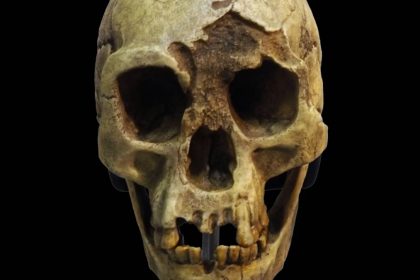
In the year 1857, German anatomist Hermann Schaaffhausen undertook an examination of a human fossil displaying an “extraordinary form” that had previously eluded his observation, neither within “existing European stocks” nor, as he noted, “even in the most barbarous races.”
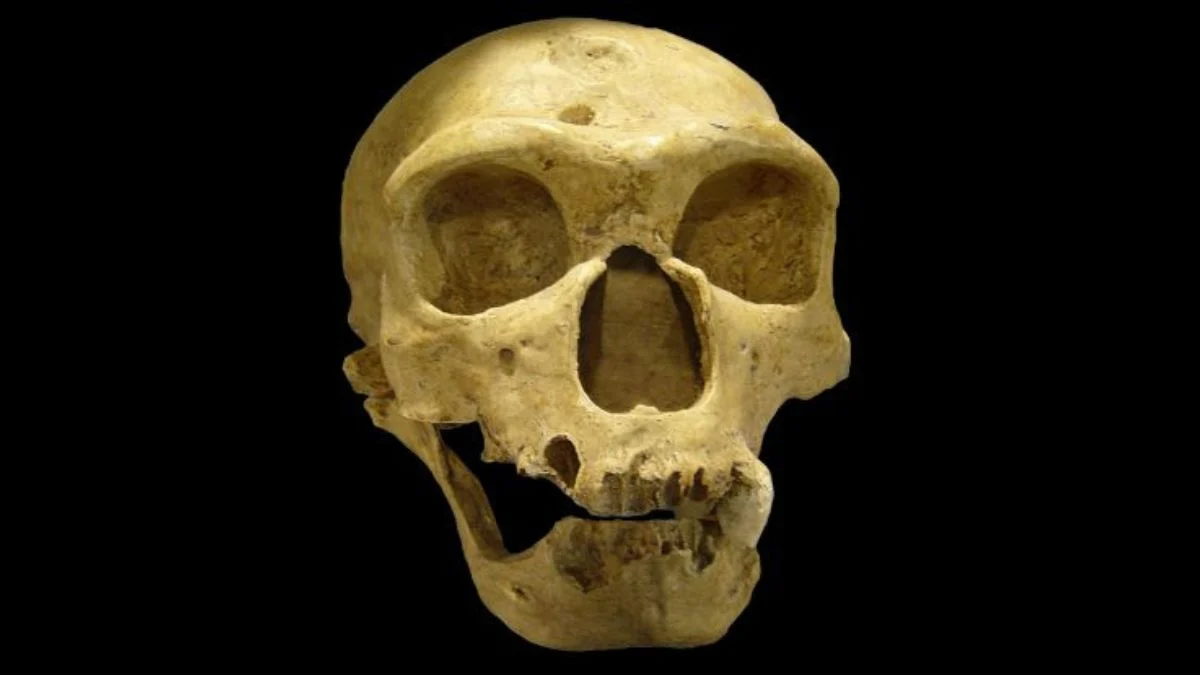
This peculiar cranium had been exhumed the preceding year in proximity to Düsseldorf, situated within Germany’s Neander Valley.
The skeletal fragments would come to be recognized as those of the world’s inaugural Neanderthal specimen, and from the outset, Schaaffhausen opined that the skull represented a “low stage of development.”
This perceived deficiency has persisted for over a century. A widely held hypothesis even today posits that humanity’s survival superseded that of Neanderthals due to our superior cognitive faculties.
However, a recent investigation by an international cohort of anthropologists has yielded evidence challenging this long-standing assumption.
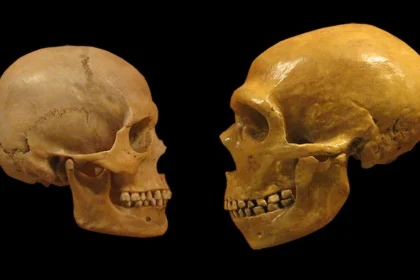
By comparing neuroimaging data from two distinct populations in the United States and China, their findings indicate that regional volume disparities observed in modern humans are more substantial than those differentiating Neanderthals from contemporary Homo sapiens.
The volumetric discrepancies that distinguish Neanderthal brains from those of modern humans are remarkably minimal.
“Should the differences observed in Neanderthals be deemed cognitively and evolutionarily significant, then analogous neuroanatomical variations frequently identified among modern human populations would necessitate similar consideration,” the research team observes.
In their review of extant literature, the researchers elucidate that cognitive capacity is, at best, weakly correlated with brain anatomy in contemporary humans.
“If we dismiss the notion that these modern human groups exhibit distinct cognitive abilities in a manner that is evolutionarily meaningful, then it logically follows that any assertion of Neanderthal differences holding such significance would also be invalidated,” they conclude.
When Schaaffhausen initially articulated his assessment of the Neanderthal cranium in the mid-19th century, scant evidence existed to suggest that humankind was significantly older than approximately 6,000 years.
Furthermore, it would be an additional two years before Charles Darwin unveiled his groundbreaking treatise, On the Origin of Species, wherein he formally presented his theory of evolution to the broader scientific community.
The initial conclusions drawn by Schaaffhausen and his contemporaries are demonstrably outdated.
In contemporary times, scientific discoveries have indicated that while anatomically modern humans flourished and Neanderthals ultimately became extinct, this outcome was not necessarily predetermined by cerebral capacity.
A growing body of archaeological findings suggests that Neanderthals possessed a greater degree of intelligence than previously estimated, notwithstanding the differences in their cranial morphology and volume compared to ours.
There are compelling indications that these ancient hominins engaged in activities such as foraging for shells on the ocean floor, utilizing tools for fire ignition, preparing medicinal compounds with antibacterial properties, crafting adhesives or waterproof substances, tailoring their attire, and even producing abstract visual art.
Frequently, Neanderthals were partaking in these sophisticated practices preceding the advent of modern humans.
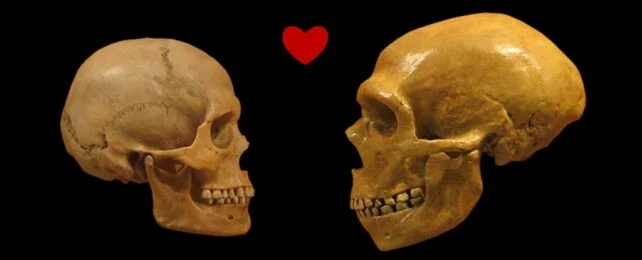
Certain osteological indicators derived from their skulls even imply that Neanderthals might have possessed the capacity for human-like vocalization, though inferring this capability from limited ancient skeletal remains surrounding the auditory apparatus presents considerable challenges.
“Hypotheses concerning Neanderthal cognition, derived from archaeological and paleoneurological investigations, have frequently concluded that they were likely cognitively limited,” the authors of the recent brain analysis state.
“Placing estimated Neanderthal variations within the context of contemporary human diversity does not substantiate this perspective.”
Moreover, it is important to acknowledge that Neanderthal skulls offer limited insights into the complex organ they once encased. Even bony structures are subject to misinterpretation.
In recent years, an ongoing scientific discourse has contested the prevailing narrative depicting Neanderthals as stooped, primitive beings more akin to apes than humans.
Evidence from analyses of their rib cages and pelvic structures indicates that their posture was, in fact, quite erect, and in certain instances, they exhibited similarly proportioned torsos.
Currently, some scholars propose that Neanderthals may not have entirely vanished, at least from a genetic standpoint. It is theorized that they might have been sufficiently similar to modern humans to be considered conspecifics.
Indeed, interbreeding between our lineages appears to have occurred over millennia. It is plausible that our ancient ‘relatives’ became integrated into our own ancestral line, explaining the prevalence of Neanderthal genes in many individuals today.
Continuing to perpetuate the assumption that Neanderthals were intellectually deficient and slow, lacking the capacity for speech or abstract reasoning, ultimately leads to an underestimation of our own ancestral heritage.
In numerous respects, our shared lineage binds us.
This research has been published in PNAS.