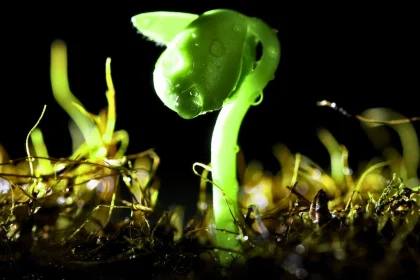
While the Chernobyl exclusion zone is largely inaccessible to human presence, it is not devoid of all life.
Following the catastrophic explosion of Unit Four at the Chernobyl Nuclear Power Plant nearly four decades ago, various life forms have not only colonized the area but have also demonstrated remarkable resilience, adaptation, and apparent prosperity.
A contributing factor to this flourishing ecosystem might be the absence of human activity. However, for at least one organism, the persistent ionizing radiation within the surrounding structures of the reactor could represent an advantage.
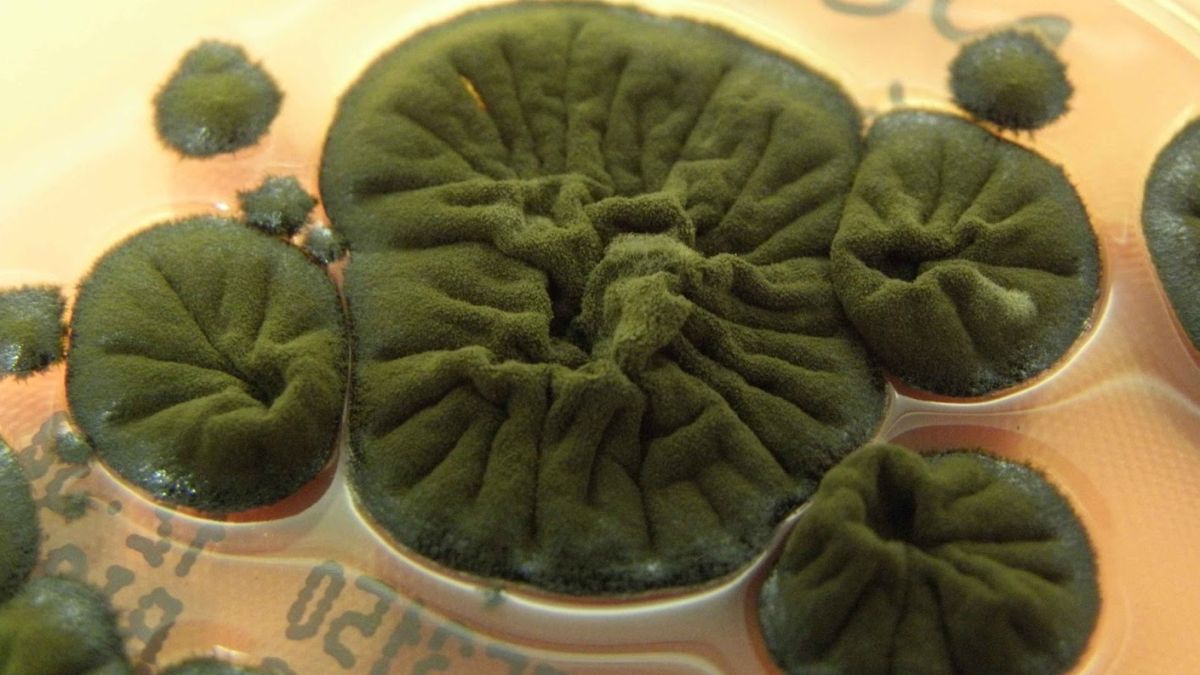
Adhering to the interior surfaces of one of the most intensely radioactive environments on the planet, researchers have identified a peculiar dark fungus that seems to be thriving exceptionally well.
This fungus, identified as Cladosporium sphaerospermum, has led some scientists to hypothesize that its dark pigmentation, specifically melanin, might enable it to harness ionizing radiation. This process is theorized to be analogous to how plants utilize light for photosynthesis, a concept sometimes referred to as radiosynthesis.
An intriguing aspect of C. sphaerospermum is that despite observations of its vigorous growth in the presence of ionizing radiation, the precise mechanisms and reasons behind this phenomenon remain elusive. Radiosynthesis is currently a theoretical framework that presents significant challenges for empirical validation.
The investigation into this mystery commenced in the late 1990s when a research team, spearheaded by microbiologist Nelli Zhdanova from the Ukrainian National Academy of Sciences, conducted an expedition within the Chernobyl Exclusion Zone. Their objective was to ascertain what forms of life, if any, could be found in the containment structure surrounding the damaged reactor.
The team was astonished to encounter a diverse fungal community, meticulously cataloging an impressive 37 distinct species. Significantly, these discovered organisms were predominantly characterized by dark to black hues, rich in the pigment melanin.
C. sphaerospermum was the most prevalent species identified in the collected samples, simultaneously exhibiting some of the highest recorded levels of radioactive contamination.
Beyond the initial surprise of the discovery, subsequent developments further intensified the scientific curiosity.
Radiopharmacologist Ekaterina Dadachova and immunologist Arturo Casadevall, both affiliated with the Albert Einstein College of Medicine in the United States, led a scientific contingent that demonstrated that exposure to ionizing radiation does not adversely affect C. sphaerospermum in the same manner it would other biological entities.
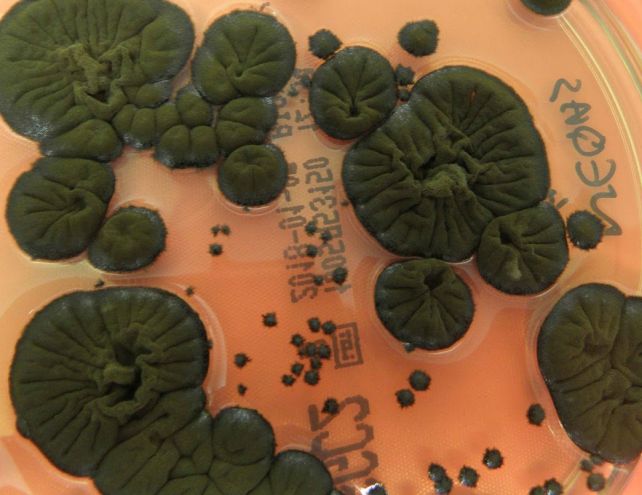
Rui Tomé/Atlas of Mycology, used with permission
)
Ionizing radiation refers to the emission of energetic particles capable of dislodging electrons from atoms, thereby transforming them into their ionic states.
While this may sound relatively innocuous in theory, in practical terms, ionization can disrupt molecular structures, impede biochemical processes, and even damage DNA. These effects are detrimental to human health, although they are strategically employed in therapeutic interventions to eradicate cancerous cells, which are particularly susceptible to such damage.
Conversely, C. sphaerospermum exhibited a remarkable resistance and even enhanced growth when subjected to ionizing radiation. Additional experimental findings revealed that ionizing radiation induced alterations in the properties of fungal melanin, an observation that strongly warranted deeper inquiry.
The subsequent publication authored by Dadachova and Casadevall in 2008 formally introduced the concept of a biological pathway reminiscent of photosynthesis.
It was proposed that this fungus, and others of its kind, might be capable of capturing ionizing radiation and converting it into usable energy. In this proposed mechanism, melanin would perform a function akin to chlorophyll, the pigment responsible for absorbing light.
Concurrently, the melanin appears to serve as a protective barrier, mitigating the more deleterious impacts of this radiation.
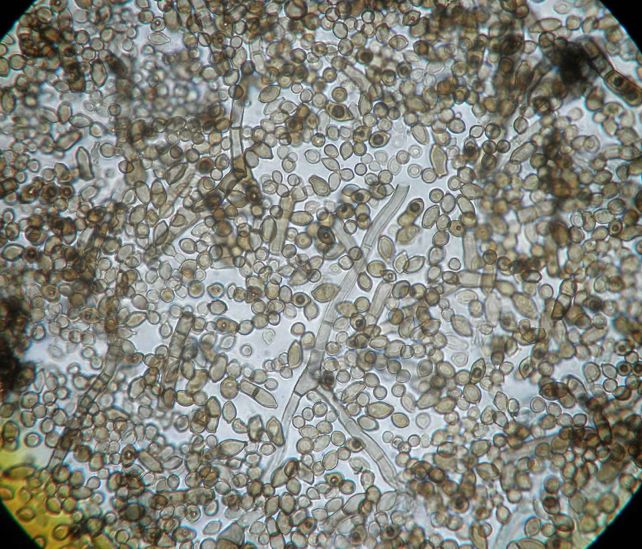
Rui Tomé/Atlas of Mycology, used with permission
)
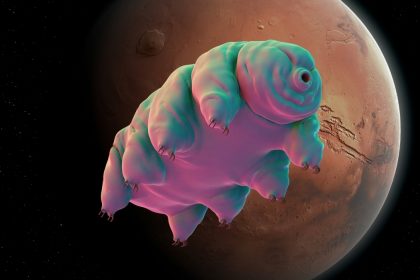
This proposition appears to be corroborated by the results presented in a 2022 study. In this research, scientists documented their findings from an experiment where C. sphaerospermum was transported into outer space and affixed to the exterior hull of the International Space Station, thereby exposing it directly to the full intensity of cosmic radiation.
Measurements taken by sensors positioned beneath the petri dish containing the fungi indicated a reduced penetration of radiation compared to a control sample consisting solely of agar.
The primary objective of this particular study was not to confirm or investigate radiosynthesis but rather to explore the potential utility of the fungus as a protective shielding material for space missions, a concept of significant interest. Nevertheless, as of the publication of this paper, the precise biological processes employed by the fungus remain undetermined.
Researchers have thus far been unable to provide definitive evidence of carbon fixation mediated by ionizing radiation, tangible metabolic gains derived from such radiation, or a clearly defined energy-harvesting pathway.
“The actual phenomenon of radiosynthesis, however, is yet to be substantiated, let alone the reduction of carbon compounds into more energy-rich forms or the fixation of inorganic carbon driven by ionizing radiation,” stated a research team led by Stanford University engineer Nils Averesch.
The concept of radiosynthesis is remarkably captivating, evoking a sense of science fiction. Yet, perhaps even more astonishing is the notion that this unusual fungus engages in an as-yet-unexplained activity to neutralize a force so perilous to human life.
Furthermore, C. sphaerospermum is not an isolated case. A melanized yeast, Wangiella dermatitidis, has demonstrated accelerated growth when exposed to ionizing radiation. Simultaneously, another fungal species, Cladosporium cladosporioides, displays an increase in melanin production without a corresponding enhancement in growth when subjected to gamma or UV radiation.
These observations suggest that the behavior exhibited by C. sphaerospermum is not a universal characteristic among melanized fungi.
This leads to the question of whether this phenomenon represents an evolutionary adaptation enabling the fungus to utilize potent radiation, which is lethal to other organisms, as an energy source. Alternatively, could it be a stress response that facilitates survival under challenging, albeit not optimal, environmental conditions?
At the present juncture, definitively answering these questions remains beyond our current understanding.
What is unequivocally understood is that this unassuming, dark velvety fungus exhibits a sophisticated engagement with ionizing radiation, allowing it to survive and potentially flourish in an environment far too hazardous for human exploration; this underscores the enduring principle that life, indeed, perseveres and adapts.