In New Delhi, the brazen urban monkeys are so audacious that they are known to pilfer meals directly from individuals’ plates.
If you have frequented New York City, you have likely witnessed squirrels exhibiting similar opportunistic behavior. Similarly, Sydney’s white ibises have earned the moniker “bin chickens” due to their penchant for scavenging refuse and discarded victuals.
This bold conduct deviates significantly from typical animal behavior observed in natural, rural settings, yet it is a discernible trait emerging in wildlife inhabiting metropolitan areas, not exclusively confined to these aforementioned locales.
Research findings indicate that fauna residing in urban environments globally demonstrate a concordance of behavioral patterns. Concurrently, these city-dwelling creatures are undergoing a reduction in intrinsic traits crucial for survival in undeveloped habitats.
This phenomenon, whereby the behavioral repertoires of urban fauna converge, is termed “behavioral homogenization.” It is a process that coincides with a diminution in species diversity directly attributable to urban sprawl.
Our research endeavors focus on fauna within urbanized settings to ascertain how humanity can facilitate the flourishing of wildlife in an increasingly developed world.
Within a recent investigation, we delve into the underlying causes and the long-term ramifications stemming from these behavioral modifications observed in urban wildlife populations.
What accounts for the similarity among urban animals?
Cities, notwithstanding their unique regional characteristics, share a common set of environmental features globally: elevated temperatures compared to surrounding rural areas, elevated noise levels, light pollution, and, most significantly, a preponderant human presence.
Squirrels in New York, monkeys in New Delhi, gulls inhabiting coastal United Kingdom cities, and other urban fauna have discerned that human settlements represent a readily accessible food source. Furthermore, given that humans typically pose no significant threat, these urban inhabitants develop a reduced apprehension towards human interaction.
Urban environments exert evolutionary pressures. Human activity and the transformations wrought upon cities have fostered the survival advantage of more intrepid individuals, who subsequently transmit these traits to subsequent generations. In the field of genetics, this phenomenon is described as the environment “selecting” for specific characteristics.
Beyond mere food thievery, other behaviors are also becoming more prevalent among city wildlife; indeed, avian species in urban settings are exhibiting more uniform vocalizations.
The reason? Cities are characterized by cacophony and are permeated by the din of vehicular traffic, thus, those individuals capable of effective communication amidst this din are more likely to endure and propagate their adaptive traits.
For instance, urban birds may elect to emit vocalizations at a higher amplitude, commence their songs at an earlier hour of the morning, or utilize higher frequency ranges to circumvent being obscured by the low-frequency rumble of traffic.
Urban environments favor individuals and species exhibiting enhanced cognitive abilities, as such attributes are requisite for survival in these complex settings.
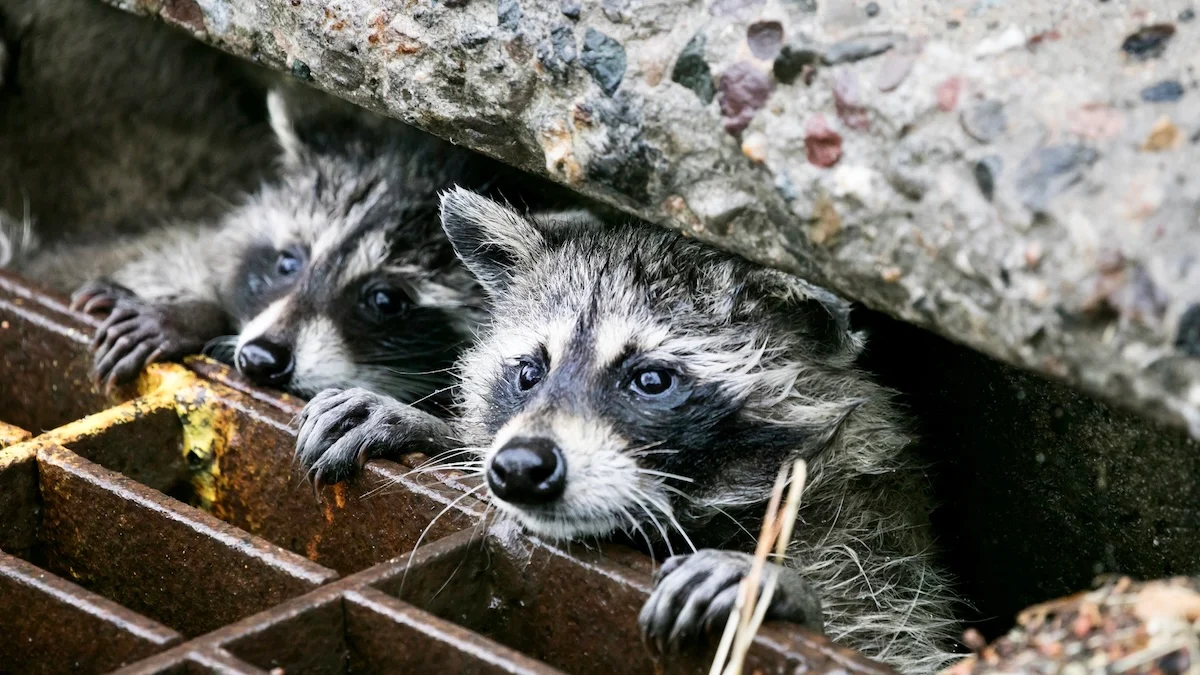
It is plausible that animals adopt analogous behaviors in urban areas by observing and learning from one another regarding the exploitation of novel anthropogenic food sources. For example, the cockatoos inhabiting Sydney have acquired the skill of manipulating refuse receptacles to access food. In Toronto, raccoons are engaged in an evolutionary race against human ingenuity as urban wildlife management efforts are directed towards designing waste containers impervious to animal intrusion.
The architectural constructs and infrastructure of cities, such as buildings and bridges, serve as habitats for bats, various avian species, and other urban inhabitants, often at the expense of utilizing more natural nesting locations. Furthermore, the presence of roadways and underground conduits profoundly influences the migratory patterns and spatial distribution of fauna.
While their rural counterparts may forage across a diverse array of locations and consume a varied diet, urban animals tend to focus their efforts on disposal containers or refuse sites where sustenance is predictably available. However, this reliance on processed waste may result in the ingestion of nutritionally compromised diets.
Ramifications of Convergent Behaviors
The erosion of behavioral variability is a pervasive consequence wherever human activity expands its dominion over natural landscapes. This trend is a cause for considerable concern on multiple fronts.
At the population level, behavioral diversity can serve as a proxy for genetic diversity. Genetic variation equips species with the capacity to adapt to future environmental shifts. For instance, in the case of animals programmed to reproduce at a specific point in the annual cycle, urban heat islands can exert selective pressure favoring earlier breeding cycles.
A reduction in genetic heterogeneity diminishes a population’s plasticity to respond to unforeseen environmental changes. In essence, possessing genetic diversity is akin to maintaining a variegated investment portfolio: distributing risk across a spectrum of assets mitigates the likelihood of a singular adverse event causing catastrophic loss.
Moreover, as animals exhibit increased tameness, novel points of friction between wildlife and human populations may arise. This could manifest as an uptick in vehicular accidents involving animals, instances of physical injury from bites, damage to property, and an elevated risk of zoonotic disease transmission. Such interspecies conflicts incur financial burdens and can result in detrimental outcomes for both humans and animals.
The diminution of behavioral diversity also presents a significant impediment to conservation efforts.
When a species experiences a loss of behavioral variance, its inherent resilience to future environmental perturbations in natural settings is compromised, thereby complicating initiatives aimed at reintroducing urbanized animals back into the wild.
Furthermore, the decline in behavioral diversity risks the obliteration of behaviors acquired through social learning and specific to distinct populations, encompassing phenomena such as localized migratory pathways, specialized foraging methodologies, traditions of tool utilization, or regional vocal dialects.
Consider, for example, Australia’s regent honeyeater, whose populations have dwindled to critically endangered status. The isolation resulting from a reduced conspecific presence has disrupted normative song-learning behaviors, hindering the ability of male birds to produce the melodious tunes essential for attracting mates and achieving successful reproduction.
Ultimately, the process of behavioral homogenization is resulting in wildlife within metropolises such as Los Angeles, Lima, Lagos, and Lahore exhibiting remarkably similar patterns of conduct, despite their disparate geographical locations and divergent evolutionary trajectories.
A considerable proportion of these behaviors significantly influence an organism’s survival and reproductive success; therefore, comprehending this specific mode of diversity degradation is paramount for effective wildlife preservation endeavors, in addition to informing future urban development strategies.–>