A recent, intriguing observational investigation has indicated a potential correlation between increased consumption of any type of meat and a diminished likelihood of developing dementia.
Crucially, this particular outcome was observed exclusively in individuals possessing a specific genetic variant, the APOE4 gene, which is notably linked to an elevated risk of Alzheimer’s disease.
Over a period spanning up to 15 years, researchers from Karolinska Institutet and Stockholm University in Sweden meticulously followed the dietary habits and cognitive performance of 2,157 participants aged 60 and above, while simultaneously documenting any dementia diagnoses.
Numerous prior studies have sounded alarms regarding the adverse health consequences associated with processed foods, and this research also provided corroborating evidence.
“A reduced proportion of processed meat within the overall meat intake was linked to a decreased risk of dementia, irrespective of APOE genotype,” stated Sara Garcia-Ptacek, a neurologist at Karolinska Institutet.
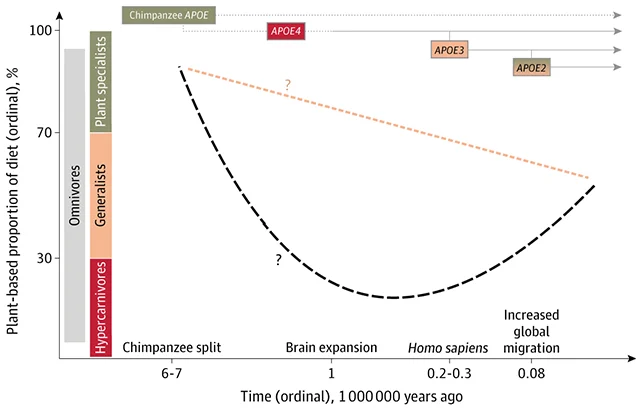
The investigators characterized the APOE4 variant as the “ancestral human form” of the APOE gene, which served as a foundational concept for the hypothesis that individuals carrying one or two copies of this variant might exhibit a distinct neurological response to a meat-rich diet.
However, it is imperative to acknowledge that the very notion of our ancestors consuming more meat has been recently subject to scrutiny and debate.
Furthermore, extensive research conducted over several decades, particularly concerning processed red meat, has established a connection between higher meat consumption and an increased risk of dementia, thus warranting a degree of skepticism pending further scientific inquiry.
This latest study introduces a layer of complexity and serves as a salient reminder of individual biological variability and the impact of diverse environmental exposures.
“The objective of this investigation was to evaluate the hypothesis that individuals with the [APOE4] gene would experience a diminished risk of cognitive decline and dementia with increased meat consumption,” explained Jakob Norgren, a gerontologist at Karolinska Institutet.
The observational data gathered provided support for this hypothesis. The findings indicated that participants with the APOE4 variant who consumed the highest quantities of meat were significantly less prone to developing dementia, and experienced a slower rate of memory impairment.
Within the dietary habits of this study group, processed meat constituted approximately one-third of their total meat intake. The results suggest that, in certain contexts, meat consumption, even including red meat, might confer cognitive benefits.
While the precise mechanisms underlying this newly identified association remain to be elucidated, it strongly implies that the interplay between dietary patterns and dementia risk may not be universally consistent. The researchers propose that individuals possessing the APOE4 variant might possess a different capacity for absorbing specific nutrients from meat.
For participants who did not carry the APOE4 gene, overall meat consumption did not demonstrate a correlation with cognitive test results or the likelihood of dementia onset.
Nevertheless, the type of meat consumed continued to be a distinguishing factor: a higher ratio of unprocessed to total meat intake, such as greater consumption of red meat or poultry, was associated with a reduced risk of dementia, irrespective of APOE status, when contrasted with elevated intake of processed meat.
The APOE gene is responsible for encoding apolipoprotein E, a protein crucial for the transport of cholesterol and lipids throughout the body, including the brain, which may shed light on the connection between APOE4 and Alzheimer’s disease. This relationship also warrants further in-depth research for complete comprehension.
It is important to emphasize that this study is observational in nature, meaning that researchers documented existing dietary patterns and subsequent cognitive changes without experimentally assigning specific diets to participants.
Consequently, the findings highlight an association between meat consumption and dementia risk but do not establish causality, meaning they do not definitively prove that increased meat intake prevents dementia.
For the present, the study suggests that individuals who carry the APOE4 gene variant – a group representing approximately a quarter of the global population – may possess alternative avenues for mitigating their risk of dementia.