It is established that microplastics infiltrate our beverages from vessels, drinkware, and food packaging. Emerging scientific investigations now indicate that plastic kettles also contribute to our daily assimilation of plastics.
A cohort of investigators, spearheaded by researchers affiliated with the University of Queensland (UQ) in Australia, has advocated for the implementation of advisory labels on these appliances and more explicit guidance on mitigating the ingestion of plastic particles associated with their use.
Analysis of aqueous samples from eight polypropylene kettles revealed that an initial boiling cycle can liberate nearly 12 million plastic nanoparticles per milliliter from the internal surfaces of the appliance.
This equates to approximately 3 billion particles present in a typical serving of tea, prior to factoring in the contribution from tea bags, which have previously been documented to release billions of microplastics themselves.
“The act of boiling water in plastic kettles represents a common daily practice for countless individuals globally. Our findings demonstrate that this seemingly innocuous habit can result in the dispersal of minuscule plastic fragments into the water we utilize daily,” remarks Elvis Okoffo, a chemical scientist at UQ.
“This investigation substantiates the assertion that plastic kettles can serve as a conduit for continuous human exposure to nanoplastics and microplastics, and that novel plastic kettles are particularly prolific in releasing these particulates into water during the heating process.”
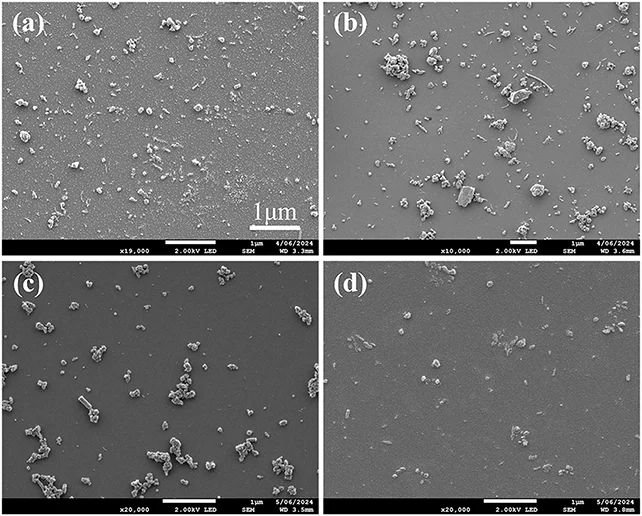
Nanoplastics are defined by their even smaller dimensions compared to microplastics. This specific study quantified both types of particles after multiple boiling events, employing two distinct kettles and varied water compositions.
The research team identified two primary methods for diminishing the concentration of plastic particulates released into the water.
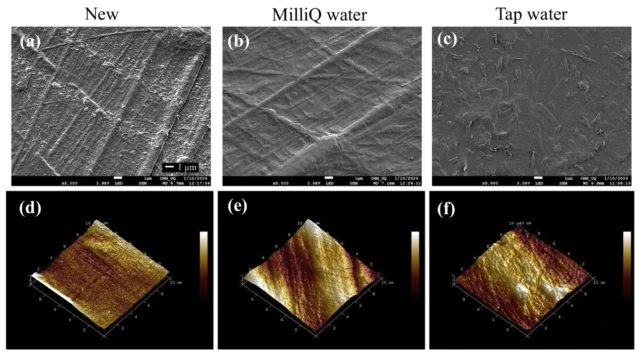
Firstly, the utilization of hard tap water, characterized by a higher mineral content. The researchers posit that boiling hard water precipitates a mineral scale (limescale) on the kettle’s interior, which effectively entraps the plastic fragments.
Secondly, the practice of repeated boiling was found to be effective. The shedding of plastic significantly decreased after ten boiling cycles, and by the fiftieth cycle, the levels, while still detectable, had reduced substantially.
Despite the observed reduction in plastic shedding, a substantial quantity of 820,000 nanoparticles per milliliter was still detected after the 150th boil, translating to roughly 205 million particles in a standard cup serving.
This suggests a practical strategy for minimizing exposure to nanoplastics and microplastics: repeatedly boil and discard the water prior to preparing your initial hot beverage.
Certain manufacturers include recommendations for pre-use boiling in the accompanying documentation for new kettles. However, Okoffo asserts that such warnings could be more prominent.
“This study addresses a significant knowledge gap concerning the contribution of household plastic items to daily plastic intake and elucidates how minor, actionable adjustments to everyday routines can curtail plastic exposure,” states Okoffo.
“While simple rinsing before initial use is a common procedure, it does not achieve the same degree of particulate removal as successive cycles of boiling and discarding. Many individuals may overlook or omit this step, underscoring the necessity for more explicit product labeling and instructions.”
A pertinent question arises regarding the potential health hazards posed by these ingested plastics. Definitive conclusions are still pending from scientific inquiry, although the presence of microscopic plastic fragments within the human body is unlikely to confer any health benefits.
Previous research has implicated microplastic consumption in the onset of various health conditions, including gastrointestinal and pulmonary ailments, as well as neurodegenerative disorders such as Parkinson’s disease. Furthermore, plastics may act as vectors for pathogens or bacteria, potentially elevating the risk of communicable diseases.
Ongoing investigations are dedicated to assessing the precise toxicity of these minute plastic particles, concurrently with efforts to devise methods for their extraction from food and beverages, and importantly, to prevent their entry into the environment.
The research team intends to extend its investigations to a broader spectrum of kettles and kitchen appliances, while also examining the role of product age in plastic shedding (the kettles utilized in the current study were all newly manufactured).
“I urge manufacturers, policymakers, and regulatory bodies to furnish consumers with safety guidelines or product labels that explicitly warn of plastic particle release,” Okoffo implored.
“Although particle concentrations diminish with continued usage, our research unequivocally demonstrates a persistent, albeit low-level, risk of exposure.”