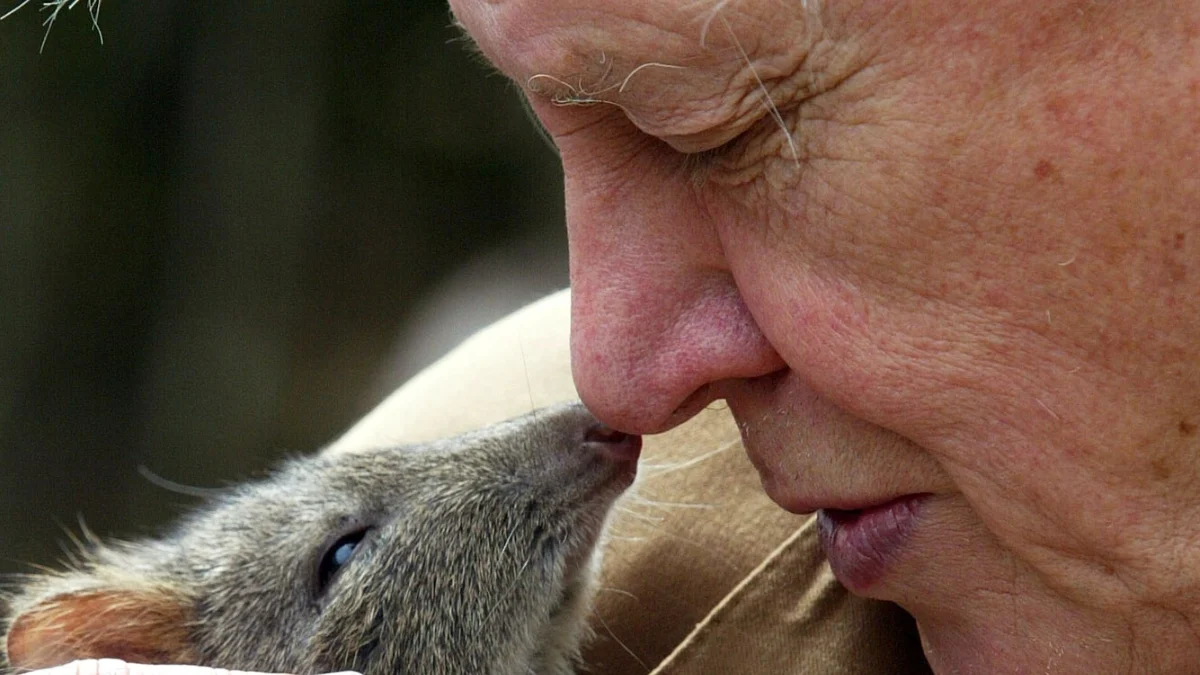
Sir David Attenborough marks a significant milestone this week, reaching 100 years of age.
Few individuals are afforded the blessing of a century-long existence. Even fewer manage to accomplish so much and positively influence countless lives.
Throughout his extensive seven-decade tenure with the BBC, Attenborough was instrumental in guiding the transition from monochrome to colour broadcasting. He also provided a pivotal opportunity for the now-celebrated comedy ensemble Monty Python, giving the green light to their iconic program, Flying Circus.
His perceptive vision and consideration for the audience’s viewing experience are partly responsible for the adoption of yellow tennis balls over white ones; they exhibit superior visibility on screen.
However, Attenborough is, without question, most celebrated for his endeavors in nature documentary filmmaking.
For many years, he has served as the presenter, tasked with educating, entertaining, and inspiring billions globally about the intricate beauty, inherent wonder, and profound majesty of the natural world, alongside the numerous perils it confronts.
This was not a foregone conclusion; early in his career, Attenborough was informed that his teeth were considered too prominent for television!

For professionals in ecology, such as myself, Attenborough’s contributions have served as a profound source of inspiration.
His work significantly influenced my decision to dedicate my life and career to comprehending, nurturing, and advocating for the preservation of the natural world. For this invaluable gift, I am eternally indebted.
A Professional Journey Fueled by Inquisitiveness
Attenborough’s profound connection with the natural environment was established early on, largely stemming from an unquenchable fascination with fossils – including the childhood delight he experienced upon unearthing an ammonite in the rural landscape of Leicestershire.
He subsequently pursued studies in geology and zoology at Cambridge University, completing his degree in 1947. Following his naval service and a period in educational publishing, he faced an initial setback when the BBC rejected his application for a radio producer position in 1950. Undeterred, he reapplied and joined the BBC as a trainee producer in 1952.
His trajectory into the realm of nature documentaries began almost immediately, with the launch of his “Zoo Quest” series in 1954. However, it truly flourished with the groundbreaking “Life on Earth” series in 1979, which brought remote locales, exceptional wildlife, and the principles of evolution and ecology to television screens.
This series cultivated a sense of wonder and admiration among viewers while rigorously upholding scientific precision.
The Art of the Master Narrator
A key factor in Attenborough’s success as a communicator is his measured, composed, yet authoritative presence. When engaging with an Attenborough documentary, viewers invariably feel a sense of assurance.
His approach deviates from conventional styles. In many other nature documentaries, the wildlife often appears incidental, serving merely as backdrops for the presenter.
Across acclaimed series like *The Living Planet*, *The Trials of Life*, *The Blue Planet*, *The Planet Earth*, and numerous others, Attenborough guided us across the globe, unveiling the aesthetic beauty, peculiar phenomena, and intricate complexity of nature, as well as its more somber and challenging aspects.
The diverse ecosystems that sustain the planet’s species are depicted with extraordinary detail. We experience a spectrum of emotions – amusement, apprehension, sorrow, indignation, exhilaration, and awe – as the narratives of the natural world unfold.
Who could forget the initial encounter with the remarkable vocalizations and mimicry of a lyrebird, or the curious mountain gorilla’s attempt at interspecies connection?
Consider the dramatic struggle for survival between a newly hatched iguana and swarms of predatory racer snakes.
Or the spectacular display of vibrant colors and intricate life within a coral reef ecosystem? Each of these scenes was masterfully captured by cinematographers and eloquently narrated by Attenborough.
Over his extensive career, Attenborough has ascended to the status of an icon. He was recognized as the UK’s preeminent television presenter of all time. However, his prodigious output has also incurred personal sacrifices. One of his acknowledged regrets is the significant amount of time he spent away from his family.
Furthermore, he is not exempt from criticism.
For an extended period, Attenborough’s focus was on the magnificence of the natural world, largely omitting the detrimental impact of human activities such as overfishing, deforestation, pollution, the introduction of invasive species, and other threats. He has also hesitated to directly attribute blame to the primary perpetrators of environmental harm.
In 2018, he stated that excessive emphasis on the reasons for wildlife endangerment could be a deterrent for some viewers.
Ecologists and conservation scientists can empathize with this viewpoint. They understand that overwhelming audiences with dire pronouncements often leads to apathy and despair, rather than fostering a motivation to act. It represents a challenging equilibrium to strike between stark realities and imbued hope.

To his credit, Attenborough has, albeit belatedly, shifted his focus to address these critical issues in recent years.
Visual documentation of plastic contamination in *Blue Planet II* and the destructive consequences of industrial fishing in Ocean have brought these matters into sharp relief.
In 2020, he released *A Life On Our Planet*, which he characterizes as a “witness statement” documenting the alarming depletion of biodiversity he has observed throughout his lifespan.
Instead of merely detailing the problems, Attenborough outlined potential solutions and articulated the roles all individuals can assume in rectifying the two most significant and profoundly interconnected challenges confronting nature: climate change, alongside biodiversity loss and extinctions.
While Attenborough’s earlier productions largely sidestepped these challenging discussions, they were remarkably successful in conveying the wonders of the natural world to millions of individuals. This achievement should not be understated.
At a time when an increasing number of people are disconnected from the natural environment, Attenborough’s documentaries served to forge a renewed connection. For individuals to value the preservation of nature, they must first develop an awareness of and affection for it.
Conservation Efforts Are Rooted in Narrative
Scientific research seldom catalyzes the behavioral shifts that might be anticipated. While the accumulation of facts and evidence is crucial, it is insufficient. Human beings respond most effectively to narratives.
In conjunction with the contributions of other globally recognized figures, such as the esteemed late Jane Goodall, Attenborough’s dedication to recounting the stories of the natural world has significantly shaped public perception. This, in turn, has spurred conservation initiatives, including the concerted effort to safeguard 30% of global oceans by the year 2030.
As he commemorates his centenary, it is heartening to witness a burgeoning generation and a diverse array of voices emerging across media, scientific communication, advocacy spheres, and the research community. These individuals articulate and disseminate their messages with considerable clarity, conviction, and passion.
Attenborough, as an individual, is but one component.
He cannot supplant the indispensable roles played by scientists, community leaders, conservationists, and policymakers in the critical endeavor of preserving nature. Nevertheless, David’s distinctive voice remains irreplaceable. As he himself has observed:
it seems to me that the natural world is the greatest source of excitement; the greatest source of visual beauty; the greatest source of intellectual interest. It is the greatest source of so much in life that makes life worth living
Indeed. A very happy birthday on May 8th to David Attenborough.