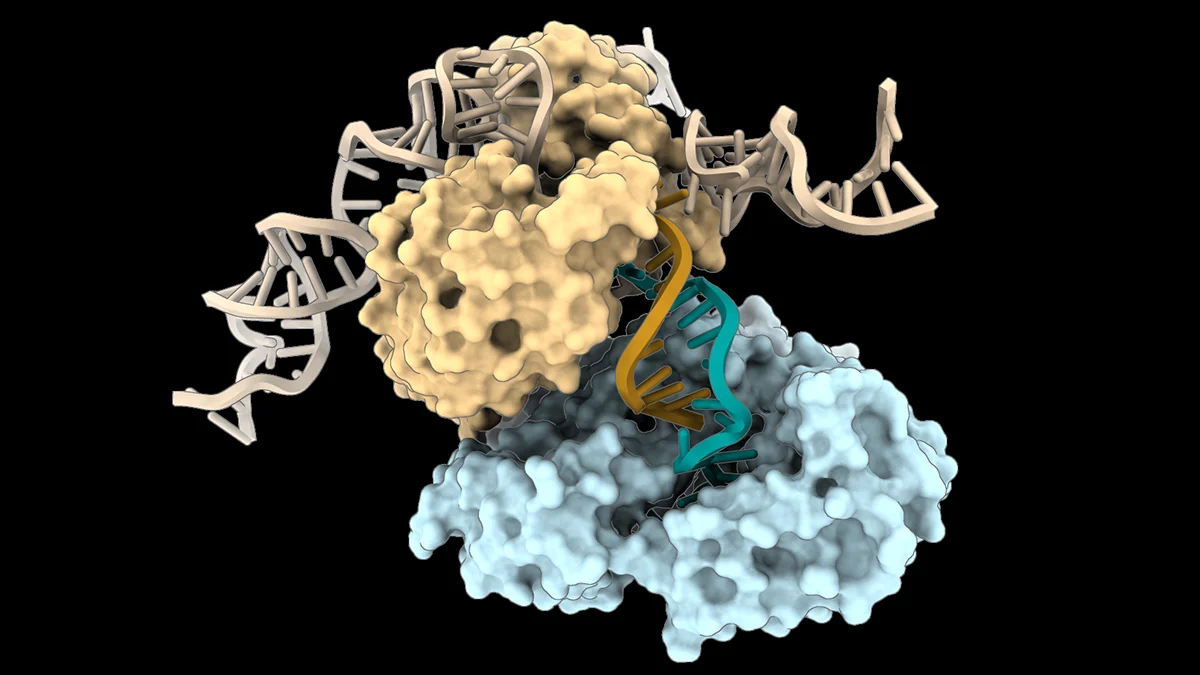
A groundbreaking discovery has been made regarding the synthesis of DNA, revealing an entirely novel mechanism for its construction.
The intricate process of creating DNA (deoxyribonucleic acid), typically relies on a molecular blueprint, or template, which specialized proteins known as enzymes utilize as a guide.
However, a research contingent from Stanford University has now identified a specific class of enzyme, termed a polymerase, capable of operating without such a pre-existing guide. The inherent three-dimensional structure of this enzyme functions as a self-contained mold, enabling the creation of new DNA strands without the necessity of any external reference materials.
This phenomenon represents an unprecedented observation in molecular biology.
While not necessarily a revision of foundational scientific tenets, this finding undeniably introduces a captivating new dimension to our understanding, with significant implications for bacterial behavior, the processes of biological evolution, and the fundamental constituents of life itself.
“The enzymatic construction of nucleic acids is a foundational biological operation that underpins genome replication, repair mechanisms, and a wide array of information processing functions across every known domain of life,” articulate the investigators in their peer-reviewed publication.
“These revelations broaden the functional spectrum of nucleic acid polymerases, uncovering a protein-guided methodology for sequence-specific DNA synthesis.”
The investigative focus originated from an examination of defense-related reverse transcriptases (DRTs), enzymes that bacteria employ as a defense against viral intrusions. Prior scientific observations had already hinted at unconventional DNA-building capabilities within these specific polymerases.
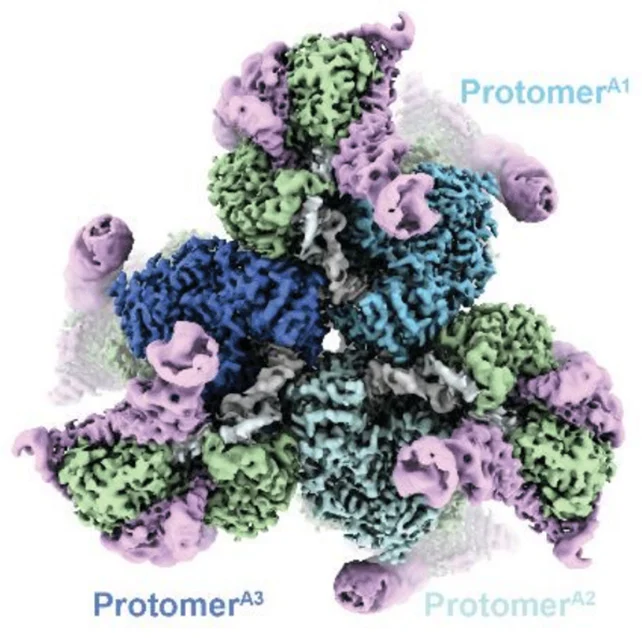
More precisely, the research team successfully isolated and studied a DRT3 system derived from the bacterium *Escherichia coli*, meticulously analyzing its performance in both laboratory settings and within living cellular environments. This detailed analysis revealed a three-component DNA-generating apparatus: two enzymes designated as Drt3a and Drt3b, supplemented by a segment of non-coding RNA.
Drt3b emerged as the pivotal element of surprise, executing its role in DNA assembly without recourse to any external template whatsoever. This represents a completely novel, self-contained mechanism.
Our prevailing comprehension of biological principles posits a unidirectional flow of genetic information, from a DNA blueprint to the protein-building machinery. However, the Drt3b enzyme circumvents this conventional pathway; its operational framework is intrinsically designed, with the structural arrangement of the assembly itself serving as the directive for DNA sequencing.
“The protein’s own structure acts as the guide for the DNA sequence,” explains Alex Gao, a biochemist at Stanford, in a discussion with Richard Stone for Science. “This was an unexpected revelation. It signifies a fundamentally new modality by which biological organisms generate DNA.”
At present, the precise mechanisms by which bacteria leverage DRT3 for viral defense remain a subject of ongoing investigation. Furthermore, while its immediate application appears highly specialized, its potential for broader utility remains an open question.
Consider, for instance, the historical trajectory of CRISPR technology, which initially functioned as a natural bacterial defense system before being adapted by scientists into a revolutionary gene-editing methodology.
Looking ahead, there is a distinct possibility that the unique strategy employed by Drt3b could be adapted and engineered for novel applications, though such advancements are likely some way off.
While the scientific community is actively pursuing methods for synthesizing DNA in laboratory environments, the specific Drt3b polymerase under scrutiny is inherently structured as a highly specific and invariant mold. Reprogramming it for diverse applications is expected to present considerable challenges, though not necessarily insurmountable ones.
Further research will be indispensable for elucidating the precise methods through which DRT3 repels viral assaults and for understanding how bacteria utilize this system. Such investigations are anticipated to yield deeper insights into the synthesis of this particular form of DNA and its potential applications.
An additional point of inquiry pertains to the evolutionary origins of this remarkably efficient biological shortcut. The researchers hypothesize that DRT3 is likely widespread across numerous bacterial species and possesses a significant evolutionary history as a means of combating viruses with minimal energy expenditure.
“Collectively, the DRT3 system demonstrates an unanticipated mode of biological information transfer, thereby augmenting the extraordinary array of nucleic acid–centric strategies employed in anti-phage defense,” conclude the researchers.