The planet’s oceans harbor numerous inhabitants renowned for their extraordinary lifespans.
Take, for instance, glass sponges, capable of enduring over ten millennia, or a single quahog clam, which can flourish for more than five centuries.
Certain species of jellyfish, along with hydra, possess such remarkable regenerative capabilities that they are considered to have the potential for perpetual existence.
However, the unassuming sea cucumber exhibits a truly distinctive approach to longevity.
Researchers in Canada have recently identified a sea cucumber species whose tissues demonstrate an ability to persist ‘indefinitely’.
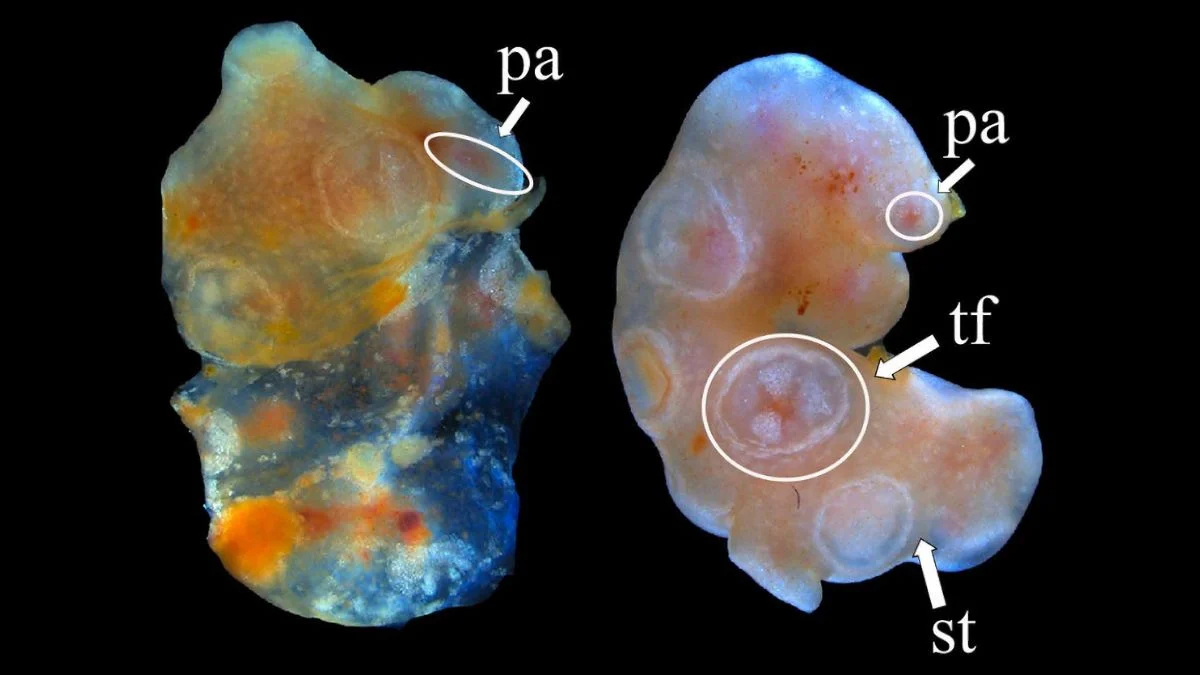
When segments of the scarlet sea cucumber, identified as Psolus fabricii, were surgically detached by scientists, these tissues exhibited an unexpected resistance to senescence.
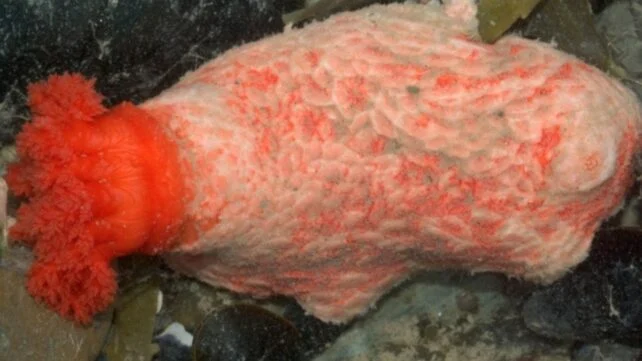
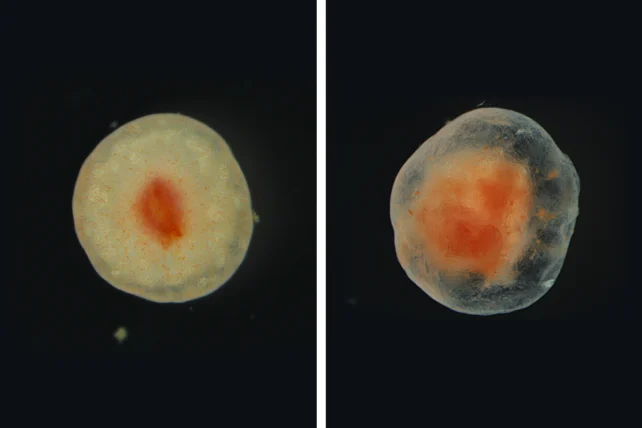
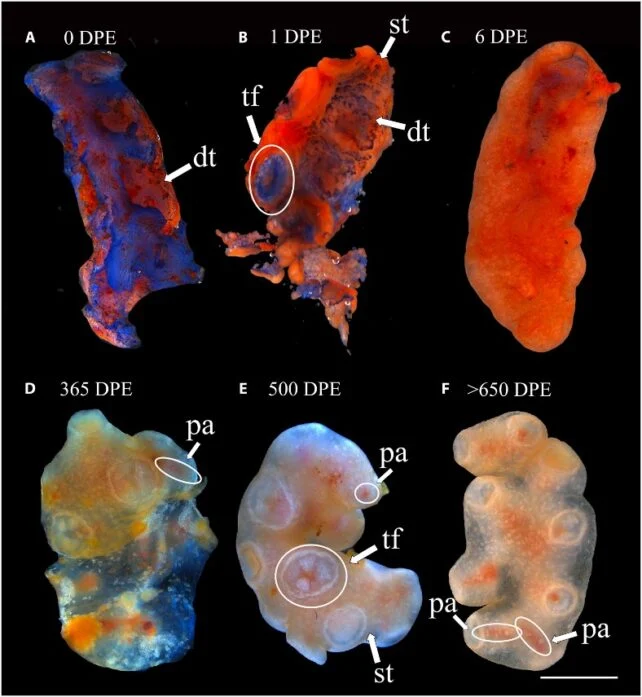
For a continuous period of three years, and still ongoing, these isolated tube feet and tentacles have remained within a tank of naturally flowing seawater, without undergoing degradation.
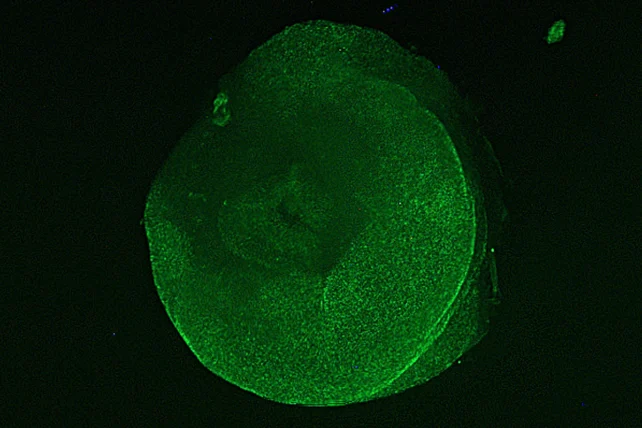
Not only have these tissues survived, but they are also actively participating in biological processes and undergoing transformations.
A significant number of their immunological, metabolic, and cellular functions remain unimpaired.
This phenomenon represents an unprecedented observation concerning the tissue of any known terrestrial animal.
“While we have not yet observed the development of a new, complete sea cucumber, we are witnessing rather extraordinary cellular proliferation and differentiation occurring years after the tissue was separated,” explains marine biogeochemist Rachel Sipler, associated with the Bigelow Laboratory for Ocean Science, a non-profit research institution in the United States.
“It’s akin to a lizard shedding its tail. We are aware that some lizards can regenerate their tails; we are exploring the possibility of whether the tail itself could develop into a new lizard.”
Similar to many terrestrial lizards, the P. fabricii species of sea cucumber exhibits a degree of clumsiness in its marine environment. It frequently experiences damage or loss of its tube feet and tentacles, suggesting a significant inherent capacity for regeneration.
To investigate this hypothesis experimentally, Sipler and her collaborators at Memorial University of Newfoundland meticulously observed and monitored excised portions of this distinctively appearing sea cucumber.
Promptly, the tissue samples began to exhibit indications of wound healing. Their immune cells appeared to initiate activity, and any non-viable cells were systematically eliminated.
This reparative phase was subsequently followed by regeneration. Over the passage of time, the tissues commenced absorbing dissolved nutrients from the surrounding seawater, initiating growth and self-organization.
After several years, the detached tentacles maintain their ability to respond to tactile stimuli, signifying the persistence of their neural network.
This marks the inaugural documented instance of a tissue ‘explant’ demonstrating sustained survival and growth in a natural milieu, as reported by Sipler and her colleagues.
“Our discoveries,” they further elaborate, “compel a re-evaluation of conventional understandings of tissue immortality.”
Furthermore, these findings prompt a profound inquiry: What constitutes the definition of ‘living’ for tissue?
For centuries, scientific endeavors have focused on maintaining the functional integrity of animal cells and tissues, even when they are detached from the organism.
Although researchers have successfully engineered immortal cell lines derived from both animal and human stem cells, these self-replicating entities necessitate highly controlled environments, shielded meticulously from pathogenic agents.
Sustaining a collective of cells within an isolated tissue segment presents a considerably greater challenge in management.
Animal tissue constitutes a resilient yet delicate structure; it depends on a sophisticated framework of intercellular communication and an efficient nutrient supply system to preserve its integrity.
Even when preserved in specialized solutions designed to prolong viability, animal tissue typically endures for approximately nine weeks in a laboratory setting.
Conversely, a fragment of P. fabricii has the potential to persist “indefinitely” in unaltered seawater, as hypothesized by the researchers.
“The natural seawater, inherently rich in microbial diversity, represents the least sterile experimental condition we could employ,” states Sipler.
“Nevertheless, this abundant environment, teeming with bacteria and organic matter, has served as a source of sustenance, facilitating the tissue’s repair and growth.”
The sole other tissue culture documented to exhibit ‘indefinite’ characteristics was derived from a chicken embryo and did not display the same regenerative and survival capabilities as the scarlet sea cucumber.
Sipler and her associates conducted tests on several other sea cucumber species; however, none of their tissue explants persisted beyond a duration of 3.5 months.
“We have encountered a species possessing this groundbreaking ability, and we were previously unaware of it,” remarks Sipler.
“This serves as a potent reminder of the vast, unexplored potential residing within the marine ecosystem.”
Andrea Bodnar, the scientific director at the Gloucester Marine Genomics Institute, who was not affiliated with this specific investigation, concurs with the study’s findings.
“The capacity of sea cucumber tissue explants to heal, reorganize, and survive autonomously for extended periods within natural seawater suggests a novel paradigm for biological resilience and tissue regeneration,” she asserts.
This research has been published in the esteemed journal Science Advances.